Diane Keaton: Photographer
When Diane Keaton first stepped onto the screen and the public’s consciousness in 1977’s Annie Hall, dressed in that iconic mix of men’s vests, ties, and oversized jackets, audiences thought they were witnessing the birth of a new kind of style.
Turns out, they were watching a revelation — a woman unafraid to inhabit her contradictions. Keaton, who passed away in 2025, didn’t just redefine how women could dress; she redefined how they could see.
Her style — those rakish hats and unbuttoned Oxford shirts — became shorthand for artistic authenticity. Yet behind the lens, she was quietly crafting another identity: that of the photographer.
Beginning in the 1970s, when fame might have seduced a lesser soul into endless premieres and parties, Keaton instead turned her camera toward America’s overlooked spaces.
Advertisement:
Diane Keaton: Reservations (1980)
During the 1970s, Keaton crisscrossed America from Las Vegas to Miami Beach with her trusty square-format Rolleiflex, turning her lens not on celebrities or sets, but on the forgotten interiors of old hotels for Rolling Stone magazine. Keaton herself appeared on the cover of Rolling Stone, 30 June 1977.
Her first book, Reservations (1980), captured the interiors of hotels across the country. No stars, no guests — just quiet rooms, anonymous furniture, the fragile geometry of temporary lives. These black-and-white images were haunted by the same melancholy that drifted through her best performances.
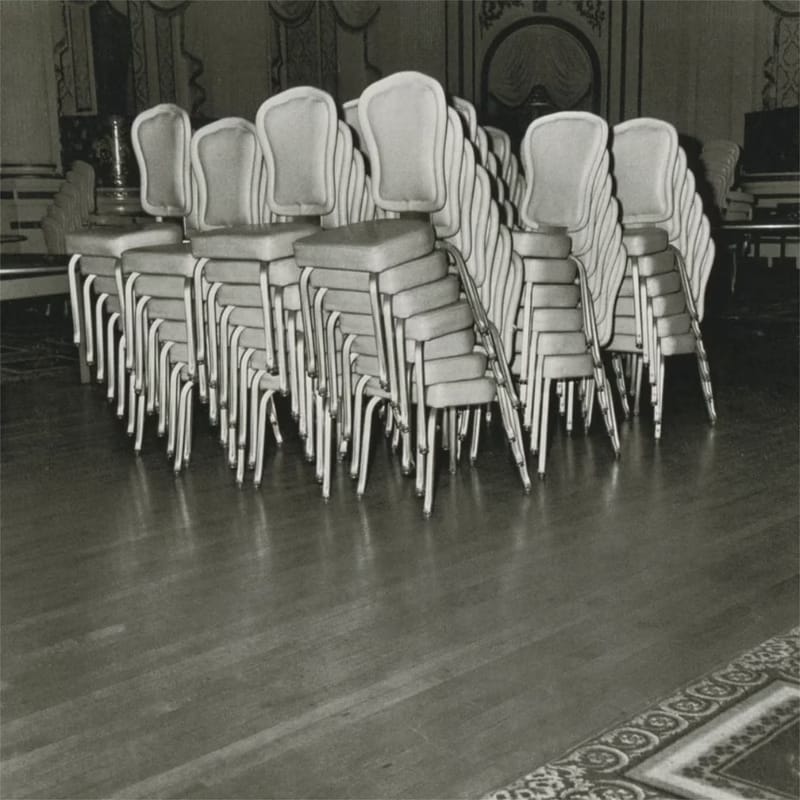
The square photographs are quietly arresting—spare, moody studies of rooms that seem to breathe the ghosts of their guests. In each frame, she found a haunting equilibrium between baroque ornament and modern vacancy, capturing a kind of American melancholy: the beauty of spaces once grand, now merely waiting.
Keaton’s Reservations and David Lynch’s Twin Peaks share a strange, hypnotic fascination with the ordinary turned uncanny. Both transform familiar spaces—hotel rooms in Keaton’s photographs, small-town diners and lodges in Lynch’s series—into stages where silence hums with mystery.
Advertisement:
Various modern reviews of Keaton’s Reservations photos comment that her work does not stand up today, it doesn’t compete with today’s art photography. I disagree. Photographs capture a place in a moment of time.
These photos, individually and as a photo essay, are full of emotion – the rooms maybe empty of people but they are full of meaning. They make you think and that is the definition of art. They are considered. They emot.
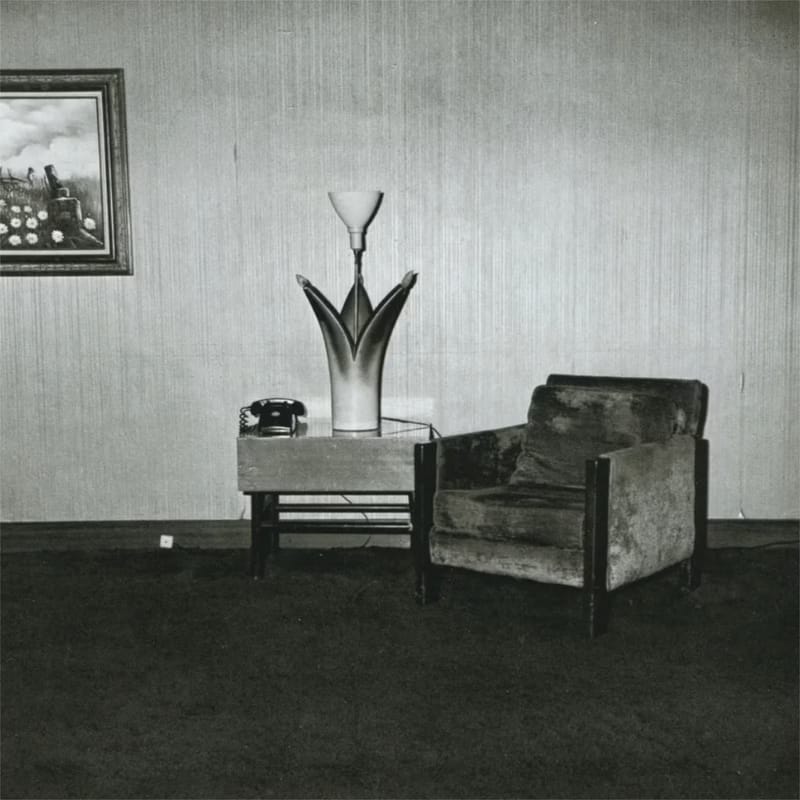
Keaton’s photographs are not naïve but noir. In Reservations, the empty rooms echo with unseen stories, just as Twin Peaks’ Red Room or David Lynch’s Great Northern Hotel seem haunted by what has already happened. Each artist, in their own medium, captures the eerie poetry of the mundane: how even the most banal interiors can become portals to dream, memory, and the quietly unsettling depths of the human psyche.
Her photo essay captures the starkness of hotel interior design standards of the era. The well composed images play on the textures of the components. Half of a framed painting or a hint of a ceiling gently frames the image … photography is often about what is included and what is omitted.
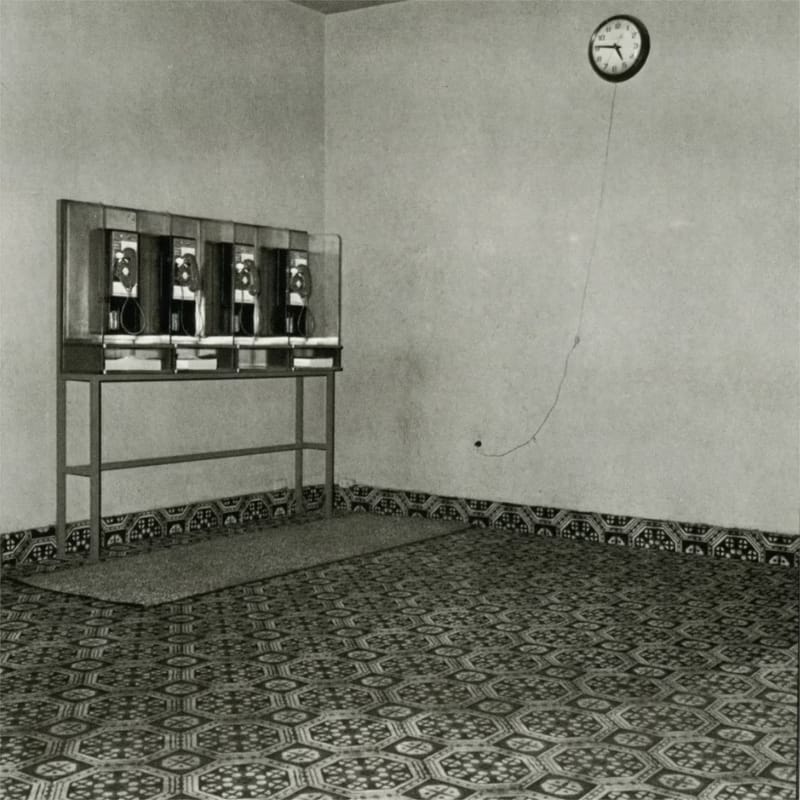
The chaotic carpet, not one but four payphones, and the extension cord dangling from the wall clock … one wonders if Keaton spent more time and thought composing her image than the interior designer spent on the room.
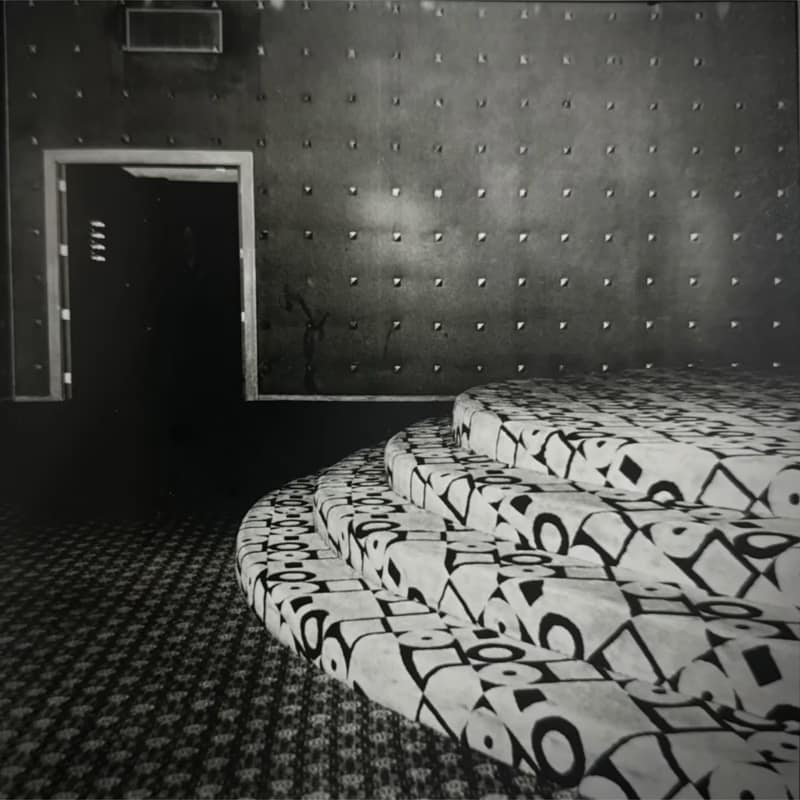
The Ambassador Hotel in Los Angeles was the home of the famed Cocoanut Grove nightclub but had been in steady decline since the assassination of Senator Robert F. Kennedy in the kitchen hallway after addressing supporters from the podium in the hotel’s Embassy Ballroom in June, 1968.
Advertisement:
Diane Keaton – The House That Pinterest Built (2017)
In 2017, Diane Keaton published The House That Pinterest Built, a lushly photographed chronicle of her own design journey and a manifesto for creative living. The book’s title wasn’t just playful—it was literal.
Keaton, an early Pinterest devotee, documented how she used the platform’s mood boards to conceptualize and construct her dream home in Sullivan Canyon, California.
The result was a minimalist yet deeply personal residence blending concrete, glass, and light—equal parts California modernism and emotional refuge. She had listed the five-bedroom, seven-bathroom 1920s-era home for sale at $US29 million ($A44.2 million) earlier in 2025, but withdrew the listing just two weeks before she died.
The volume captures Keaton’s flair for mixing high design with thrift-store finds, mirroring her cinematic charm: part architect, part eccentric collector, and entirely original.
Diane Keaton’s The House That Pinterest Built is available from Amazon USA (we may earn a small commission if purchased via this link). Keaton also pinned her favourite photography in “Picture Universe” on Pinterest.
Advertisement:
Diane Keaton – California Romantica (2019)
Two years later, California Romantica (2019) expanded her gaze from the personal to the regional. This coffee-table book is a love letter to Southern California’s Spanish Colonial Revival and Mission-style architecture—white stucco walls, red tile roofs, wrought iron balconies, and courtyards drenched in light.
Through sumptuous photographs and her own essays, Keaton celebrated the craftsmanship and warmth of the state’s historic homes, arguing that beauty doesn’t need to be sterile or new.
The book reveals a photographer’s eye for light and composition, and a preservationist’s heart for history—reminding readers that romance, like good architecture, is built to last.
Diane Keaton – Saved: My Picture World (2022)
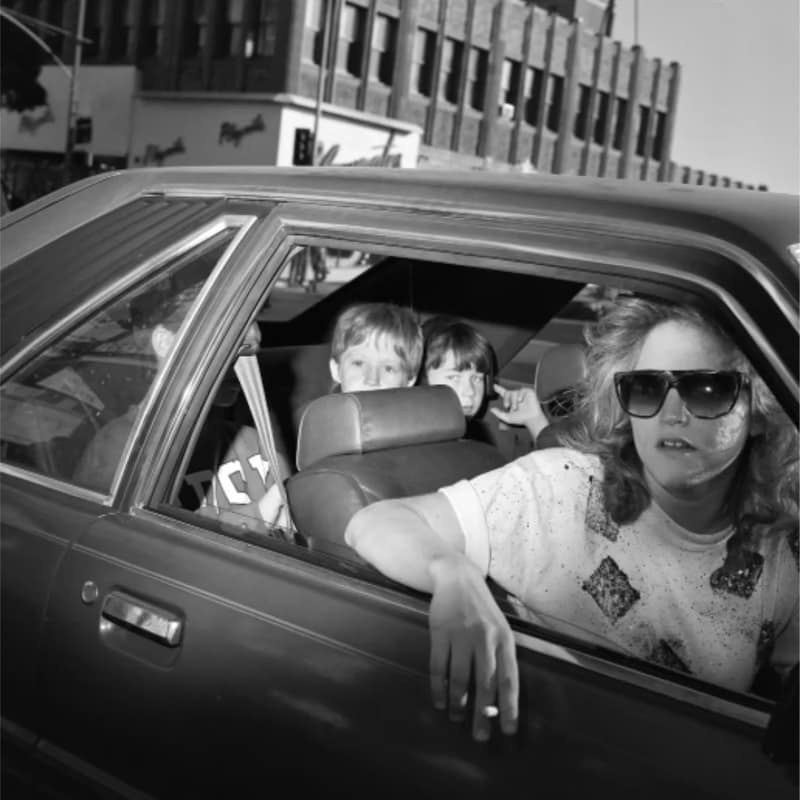
Saved: My Picture World (2022) offered something more personal — a collage of her own photographs mingled with found images. It was as though Keaton had raided the attic of American memory and rearranged it into something deeply human. The photos, often worn and imperfect, became metaphors for her lifelong curiosity about aging, loss, and beauty found in impermanence.
Advertisement:
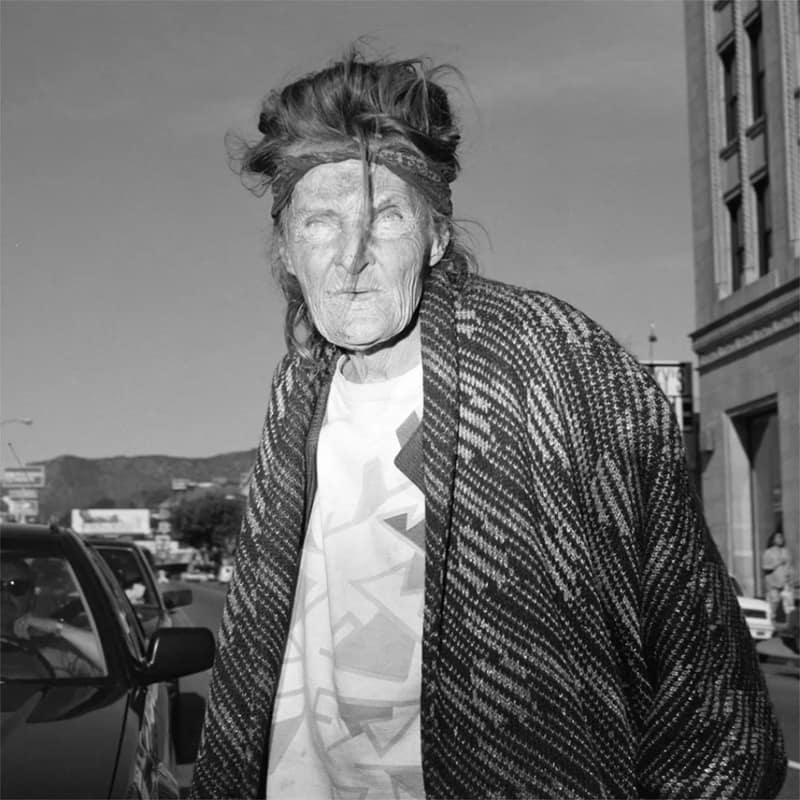
In 2022, Keaton released Saved: My Picture World, a richly layered work that blurred the lines between memoir, photography, and art installation. Described as a “visual autobiography,” the book assembled a lifetime of looking—images chosen by Keaton from her vast archives, interwoven with photographs she took herself using her beloved Rolleiflex camera.
But Saved was far from a vanity project; it was an emotional excavation. Through juxtapositions of personal photos, found imagery, torn pages, handwritten notes, and family memorabilia, Keaton built a tactile narrative of memory and meaning. The inclusion of photo collages and more abstract works by her brother, Randy Hall, added another dimension—a tender dialogue between siblings bound by creativity and loss.
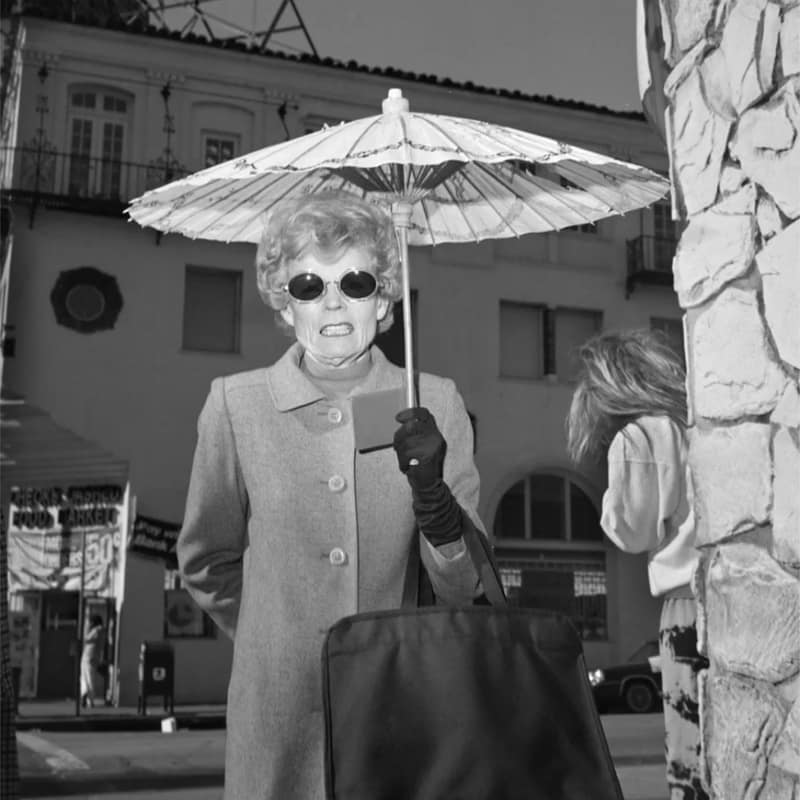
Every page feels like a conversation between what we keep and what time erodes, a meditation on imperfection and the urge to preserve what matters. With Saved, Keaton invited readers not into her fame, but into her way of seeing—curious, nostalgic, sometimes chaotic, always deeply human.
Advertisement:
Keaton was also a tireless collector of photography books—an obsession that bordered on the poetic. In a 2014 interview with The New York Times, she confessed that her dream was to “purchase every photography book ever published,” acquire an old warehouse, and transform it “into a massive library of image-driven books and open it to the public.”
It wasn’t a throwaway fantasy; it was a window into how she saw the world. For Keaton, photographs were more than objects of beauty—they were fragments of collective memory, democratic by nature, accessible to anyone with curiosity and time to look.
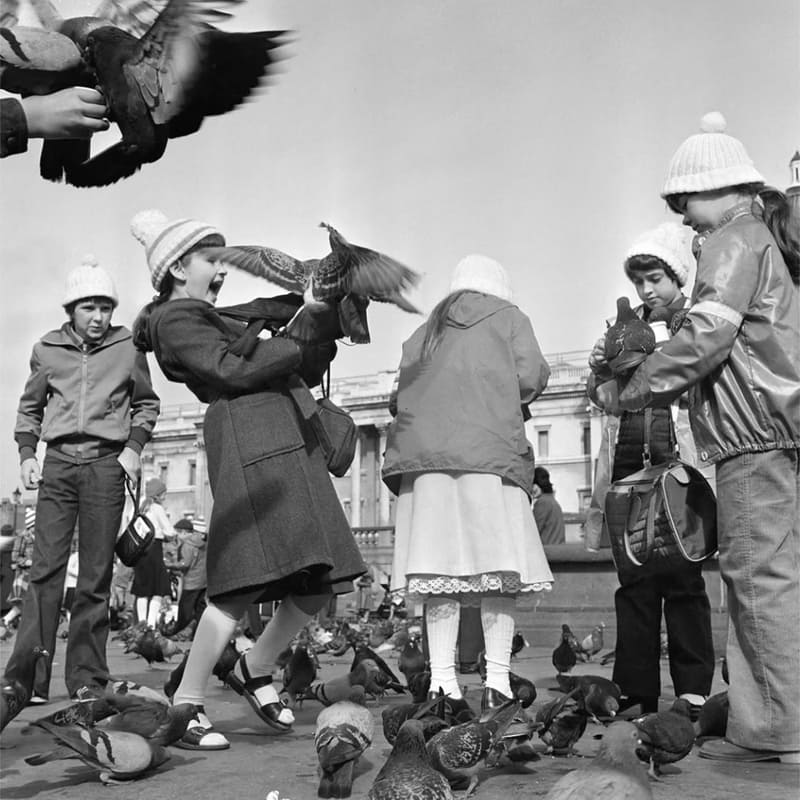
Her personal collection reportedly filled entire rooms, a private museum of vision where documentary giants and forgotten amateurs shared the same shelf. The imagined warehouse-library wasn’t about ownership or prestige, but preservation—an attempt to give permanence to the fleeting act of seeing. It was classic Keaton: eccentric, generous, and guided by a reverence for the ordinary turned extraordinary.
In her photography, Keaton was never the performer — she was the witness. Her work feels like a quiet walk through memory, a meditation on what remains when glamour fades. She saw poetry in peeling paint, truth in empty chairs, and grace in what others might discard.
So yes, Diane Keaton won an Oscar for Annie Hall. But she also won something rarer: the ability to look at the world without pretense — through both eyes and heart. She taught us that vision isn’t about what you show; it’s about what you notice.
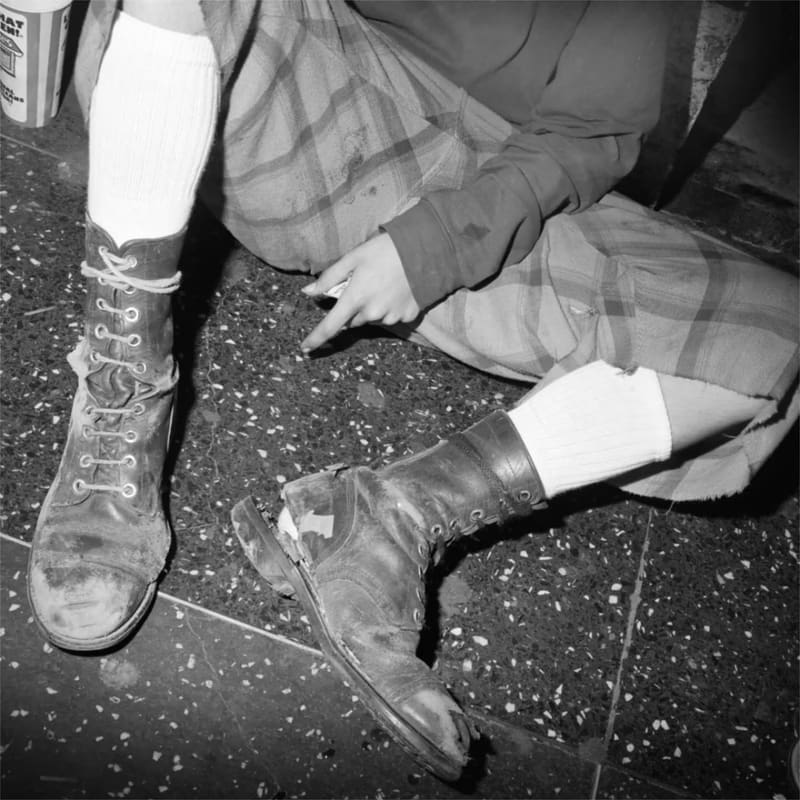
In the end, Diane Keaton’s greatest performance might not have been in front of a camera at all, but behind one — reminding us that the act of seeing is itself a kind of love.
Diane Keaton died of primary bacterial pneumonia on Saturday, 9 October 2025, at 79.
Advertisement:
Related stories
Diane Keaton’s Home: The Beauty of a Life Collected
Vivian Maier’s Personal Photobook Library Shows Her Influences
Rolleiflex vs Hasselblad film cameras?
Iconic Phone Cases Inspired by Emily in Paris
Guide to Collecting Vintage Film Cameras
Are Vivian Maier photographs valuable?
The copyright of Vivian Maier’s street photography
Vivian Maier was Phil Donahue’s nanny
Vivian Maier gives a photography lesson in exposure
“Packing Up” by Vivian Maier in New York, 1955
Vivian Maier Vintage Photography Auction Bargains
Susan Sontag vs. John Berger debate Storytelling
John Berger on August Sander, Henri Cartier-Bresson & Paul Strand
Advertisement: