Musk: The Documentary
Alex Gibney’s film has encountered advertising refusals, legal threats and a striking allegation from Ashley St. Clair. The battle over its release raises questions about who controls the conversation.
A documentary about a powerful man’s influence over public debate runs into trouble buying space in the places where public debate happens. Hollywood could hardly ask for a more pointed publicity campaign. Unfortunately for the distributor, this one arrived as a rejection notice.
Alex Gibney’s nearly four-hour documentary Musk is approaching its American cinema release amid a dispute that reaches beyond whether audiences admire or despise its subject. It asks an uncomfortable question: how easily can a film scrutinising concentrated power reach an audience through platforms that exercise enormous power themselves?
On September 25, The Hollywood Reporter reported that YouTube, TikTok and Meta had rejected paid advertising featuring the film’s trailer, citing political content. X, owned by Musk, reportedly would not engage with distributor Bleecker Street, even about advertising its other forthcoming films.
But the situation has changed. Meta and YouTube subsequently said they would allow the ads. Meta called its rejection an error.
It would be inaccurate to describe an ongoing, universal advertising blockade. It is also essential to distinguish refusing paid promotion from removing a film or prohibiting people from discussing it.
The original reporting did not establish that Musk instructed the other companies to reject the advertising, or that the platforms coordinated their decisions. Suspicion is not evidence, however inviting the circumstances.
What the episode does demonstrate is the vulnerability of cultural work to decisions made inside a handful of companies. An advertising classification can become a distribution problem. An appeal can consume precious days before a release. A documentary need not be formally banned to encounter serious obstacles reaching potential viewers.
Advertisement:
Musk: The Documentary trailer
Ashley St. Clair
Then there is Ashley St. Clair. The former conservative influencer, who shares a son with Musk and appears in Gibney’s film, told reporters at the Venice Film Festival that she had rejected an offer of US$40 million for her silence.
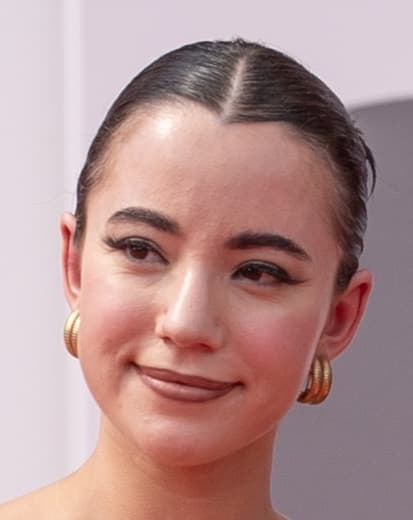
“I was offered the opportunity not to speak for $40 million,” she said.
People reported that her account concerned a nondisclosure agreement; Musk’s lawyers and associate Jared Birchall did not immediately respond to its requests for comment. The offer remains her allegation, rather than an independently established payment or agreement.
The distinction does not diminish the public interest in hearing her account. It makes accurate attribution indispensable.
Her participation introduces a human dimension to a story easily reduced to rockets, electric vehicles and spectacular wealth. A former partner is describing the value allegedly placed on her silence, while choosing to speak in a film intended for a mass audience.
Viewers are entitled to weigh that testimony. They are also entitled to hear any substantive response. Neither wealth nor hostility towards wealth should substitute for examining the evidence.
Gibney’s broader concern is the power Musk has accumulated and the stories that helped him accumulate it. In an Associated Press interview, the filmmaker described beginning with admiration and emerging with a much more critical view. He also said fear of reprisals discouraged potential interviewees.
That is the filmmaker’s account of his investigation, not a licence to treat every claim in the finished work as settled fact. A documentary can perform valuable scrutiny and still deserve scrutiny itself.
Musk’s objections are part of the story. His lawyer Alex Spiro threatened legal action, arguing that the film misleadingly implies Starlink helped manipulate the 2024 election. He said Starlink was not connected to vote tabulation. Production company Jigsaw defended the film and the right to examine powerful public figures.
No assumption of election interference is necessary to see the importance of the dispute. The question is whether contentious reporting can be assessed openly, with allegations, evidence and rebuttals available to audiences.
Nor is this a story the entire media has refused to cover. The advertising controversy became public because a journalist reported it. Other outlets have covered St. Clair’s statements, interviewed Gibney and reported Musk’s objections. Pretending otherwise would erase the reporting that makes this account possible.
The sharper issue is the gap between publishing a story and getting it seen.
Bleecker Street lists Musk for selected cinemas in Los Angeles and New York on October 9, followed by a nationwide US release on October 16. Its website also advertises appearances by Gibney and St. Clair.
The public does not have to accept Gibney’s conclusions. It should have the opportunity to examine them. For a film concerned with power over the conversation, that is a modest request — and a revealing one.
Official film page and trailer
Related stories
Why Musk closed the Global Engagement Center
What to do about Musk’s predicted “hardship” & market crash?
What is Elon Musk’s “everything app” aka “X”?
Meta launches Threads, their rival to Musk’s Twitter
Meta tried to stop Careless People book by Sarah Wynn-Williams
Can Hegseth and D.O.G.E. balance the Pentagon budget?
Advertisement: