Should journalists use “lede” or “lead”?
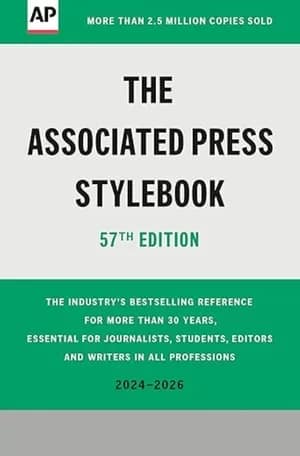
It was sometime around 2 a.m. in the newsroom, the witching hour when even the most seasoned editors get that thousand-yard stare. The desks are littered with half-empty coffee cups, crumpled paper, and a few dust-covered copies of the AP Stylebook that look like relics from another age.
If you squint hard enough, you might even see the faint shadow of the Ghost of Old Journalism haunting the place. His name? Lead.
He died long ago, replaced by pixels and the gallows humor of a generation that never laid eyes on molten metal or sniffed the fumes of a hot-type press.
Now we’re left with his feeble cousin, “lede.” And if that sounds confusing, well—welcome to journalism.
You see, “lead” once had a double life. It was the soft metal used to print newspapers, a poison-laced foundation upon which entire empires of ink were built. In that context, “lead” meant the lines of type, carefully laid in lines across the printing press, and it dictated the structure of the whole damn page.
You had a typo? Fix it. Misplace a letter? Hot lead was poured, and the day was saved. Then, somewhere in the 1970s, typesetters gave way to computers, and lead became something you might find in a paint can lawsuit.
Enter “lede” with an awkward “e” tacked on the end. A spelling change intended to cut through the fog of ambiguity—a gaudy, unnecessary disguise for what everyone used to understand perfectly. Lede is that carefully crafted opening sentence that grabs the reader by the throat and drags them into the story, whether they’re ready or not.
Like a barker at a carnival, it says, “Come in, come in! Feast your eyes on the sensational and the strange.” So, why swap out “lead” for “lede”? Some say it was to avoid confusion.
The irony here, of course, is that the move created more confusion, leaving journalism students and rookie reporters scratching their heads and wondering, “Why the hell did they change it?”
Maybe it was all part of the industry’s compulsive rebranding spree. With lead no longer needed in type-setting, some editorial oracle decided the word needed to be “fresh,” wrapped in modern packaging—one small, awkward tribute to the digital age.
But here’s the thing. As an old-school hack, I’m going to say it: we’re done with convoluted jargon, dammit. We don’t need “lede” to evoke nostalgia for the heavy-metal days, and we don’t need complex lingo that raises an eyebrow or leads to explanations that rival fine print in a prescription ad.
Plain English, people. The “lead” is just your opening sentence. It’s the bait, the hook, the sucker punch that forces your readers to stick around for the show.
See what I did there? I buried the lead!!
Let’s lead, shall we? We’re scribes, not mystics. Leave the cryptic language to the lawyers, the bureaucrats, and the poets. Here in the newsroom, it’s all about clarity, speed, and getting the story right.
So take your “lede” and toss it in the recycling bin. We’re here to lead with impact, with punch, and with a pure shot of adrenaline straight to the heart of every word we lay down.
Type away, with that spirit as your guide. Let’s lead, not lede.
Related stories
The Fourth Estate – our stories about the media
The Truth About Richard Denniss and The Australia Institute
Culture Jamming – Activism for the Information Age
Dynamic Ticket Pricing Disrupts Live Entertainment Industry
Photographer’s Rights in the New Media Era
Truth in Political Advertising Laws needed
Should Kevin Spacey Remain Cancelled?
Advertisement: