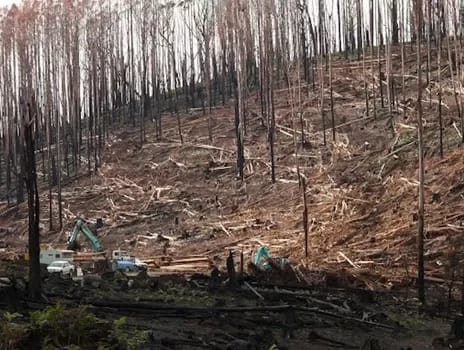
As the world faces increasing environmental challenges, the need to reevaluate and transition forestry practices has never been more critical. In New South Wales (NSW), the debate over the use of state forests versus plantation timber is intensifying.
Endangered animals, such as the Greater Glider, Quolls and Koalas, are on the brink of extinction, and the frequency and severity of bushfires are escalating. It is clear that business as usual is no longer sustainable.
The state-owned, loss-making, accident-prone, union-run, and tory-enabled Forestry Corporation of NSW (FCNSW) is resistant to change, clinging to decades-old practices. The time has come to shift to more sustainable and environmentally friendly methods.
The Plight of Endangered Species
Greater Gliders and Koalas, iconic symbols of Australia’s unique wildlife, are facing unprecedented threats. Habitat destruction due to logging in state forests is a primary cause of their declining numbers.
The Greater Glider, once abundant in the forests of NSW, is now listed as endangered. Koalas, too, are experiencing significant habitat loss, leading to dwindling populations.
These animals rely on specific trees for shelter and food, and the indiscriminate logging of state forests is pushing them towards extinction.
The Environment Protection Authority (EPA), which should be safeguarding these species, has been criticized for its inadequate response to the crisis.
Instead of enforcing strict protections, the EPA has been accused of being influenced by FCNSW, further exacerbating the plight of these endangered animals.
The Increasing Threat of Bushfires
Bushfires have always been a part of the Australian landscape, but their intensity and frequency are increasing due to climate change and poor land management practices.
Logging in state forests not only destroys vital habitats but also increases the risk of severe bushfires. Thinning forests and removing older trees, which are more fire-resistant, leaves behind dense undergrowth that is highly flammable.
Plantation timber, grown specifically for harvesting, offers a more controlled and sustainable alternative. Plantations can be managed to reduce fire risk, and their use can alleviate the pressure on native forests, allowing them to recover and thrive.
The Resistance to Change
Despite the clear environmental and economic benefits of transitioning to plantation timber, FCNSW has been resistant to change. The organization, described as state-owned, loss-making, accident-prone, union-run, and tory-enabled, continues to rely on outdated practices.
Reports indicate that FCNSW has captured the regulatory body meant to oversee its activities, with an ex-mining executive at the helm of the EPA. This cozy relationship undermines efforts to implement necessary reforms and protect the environment.
International Expertise and Recommendations
Hundreds of international experts have called for a transition to plantation timber, emphasizing its advantages over traditional logging practices. Plantation timber is renewable, sustainable, and can be harvested without harming native ecosystems.
Countries around the world have successfully adopted plantation forestry, reducing their reliance on natural forests and preserving biodiversity.
The benefits of transitioning to plantation timber are manifold:
- Environmental Protection: Preserving native forests and protecting endangered species.
- Economic Viability: Plantation timber can be a profitable and sustainable industry, reducing losses incurred by traditional logging practices.
- Fire Management: Plantations can be managed to reduce fire risk, protecting both human communities and wildlife.
- Global Reputation: Adopting sustainable forestry practices can enhance Australia’s reputation as a leader in environmental stewardship.
Protecting Our Wildlife and Forests
The need to transition from logging state forests to plantation timber is clear. The current practices of FCNSW are not only environmentally destructive but also economically unsustainable.
Protecting endangered species like the Greater Glider and Koalas, mitigating the risk of bushfires, and aligning with international best practices are essential steps for the future of NSW’s forests.
It is time for FCNSW to embrace change, guided by scientific expertise and a genuine commitment to environmental conservation. Only then can we ensure a sustainable and thriving ecosystem for generations to come.
Related stories
See our coverage of the Forestry issue, and the threats to Koalas & other endangered wildlife
Is NSW Environment Protection Authority a “captured agency”?
Forestry Corporation NSW’s Illegal Logging Exposed
Australia’s elusive Quolls headed for extinction
Court allows NGO to sue NSW Forestry Corp for Environmental Violations
MPs $64,000 question – Save Koalas or logging trucks
NSW Forestry Corp fines exceed $1,000,000 since 2019 fires
Forestry Corp NSW forms a special police branch
Citizen Scientists Take Action in Bulga State Forest
Logging Threatens Koala Habitat Despite Community’s Pleas
EPA stops logging at Flat Rock State Forest
EPA’s Stop Work Order extended in Tallaganda State Forest
Midcoast Council Votes to Save Bulga Forest on Biripi Country
The Great Koala National Park without any Koalas
Please comment below or visit our advertisers, if this is interesting to you. ChatGPT assisted. Thanks for visiting our growing magazine.