

SPECIAL REPORT | Tiny Homes: Small Spaces, Big Questions in a World Short on Shelter
There are now more displaced people on Earth than at any point since records began. Wars redraw borders overnight, climate change quietly erases coastlines, and in wealthy nations the crisis takes on a different disguise—rents rising faster than wages, first homes drifting out of reach, and entire generations quietly giving up on ownership.
From refugee camps in the Middle East to van dwellers in California, from overcrowded European cities to Australia’s stretched regional housing markets, the same question keeps resurfacing: What does a home actually need to be?
Tiny homes have entered that conversation not as a miracle cure, but as a provocation. They challenge the assumption that housing must be large, permanent, and financially crippling. And in doing so, they expose just how rigid—and outdated—many housing systems have become.
Local & Independent News Association supported Central Coast News journalist Ivona Rose in writing a Special Report on the research by Dr Heather Shearer at Griffith University on the Tiny Homes phenomenon, “Tiny houses: movement or moment?”
Advertisement:
What Exactly Is a Tiny Home?
Before the debate goes any further, it helps to pin down what we’re talking about—because even that isn’t straightforward.
A “tiny home” is less a strict category than a loose family of ideas. It can be a compact fixed dwelling, a movable structure on wheels, a prefabricated cabin, or even a repurposed shipping container. In most cases, it sits somewhere between 10 and 60 square metres—small enough to challenge convention, large enough to live in.
The idea of the tiny home isn’t new—it’s been quietly living in our backyards for decades under a different name. The granny flat, the sleepout, the worker’s cottage: small, self-contained spaces built to house family, extend a property, or make do with less.
What’s changed isn’t the concept, but the context. What was once a practical add-on for relatives has re-emerged as a standalone response to affordability, mobility, and a world where space—both physical and financial—is no longer guaranteed.
Cost is where the appeal sharpens. A basic, self-built tiny home might come in under $30,000. A professionally designed, fully fitted model—with insulation, plumbing, solar, and the sort of finishes that make Instagram hum—can climb past $100,000. Still a fraction of the median house price in most developed countries.
Then there’s the ingenuity. Shipping containers are being transformed into modular homes. Salvaged materials—second-hand windows, reclaimed timber, recycled fixtures—are stitched into builds that are as much about philosophy as function. Off-grid systems reduce reliance on infrastructure. Footprints shrink. So do bills. It’s housing as adaptation. But adaptation runs headlong into regulation.


The Global Pattern: Demand Meets Resistance
Across continents, the same story repeats. Interest rises quickly; policy lags behind. Back in 2021, Griffith University examined the phenomenon in its research article “Tiny houses: movement or moment?” Co-author Dr Heather Shearer was clear-eyed about the outcome.
Tiny homes, she argued, are not the answer to the housing crisis—but they can relieve pressure for specific groups: singles, older women, young couples, and those priced out of traditional markets.
That distinction matters. Tiny homes aren’t replacing suburbs. They’re filling the gaps those suburbs have created. Yet adoption is slowed everywhere by one persistent problem: systems built for conventional housing don’t know what to do with something that sits outside it.
Advertisement:
A Definition Problem with Real Consequences
In Australia—as in many countries—tiny homes fall into a legal grey zone.
“Tiny homes are not defined in NSW legislation but are considered as either buildings, manufactured homes or caravans, which have clear approval pathways,” a spokesperson for the Department of Planning, Housing and Infrastructure said. Clear on paper, perhaps. Less so in practice.
Local councils are left interpreting rules never designed for this kind of hybrid housing. A single tiny home might be classified differently depending on its wheels, its plumbing, or whether it looks more like a shed or a studio. The result is hesitation. And hesitation, in a housing crisis, is its own kind of bottleneck.
“It is very difficult to give any specific advice,” a Central Coast Council spokesperson admitted, noting that planning systems never properly contemplated tiny homes as a distinct form of development.
Globally, the same issue plays out under different names: zoning conflicts in the United States, planning permission hurdles in the UK, land-use restrictions across Europe. Different rulebooks. Same confusion.

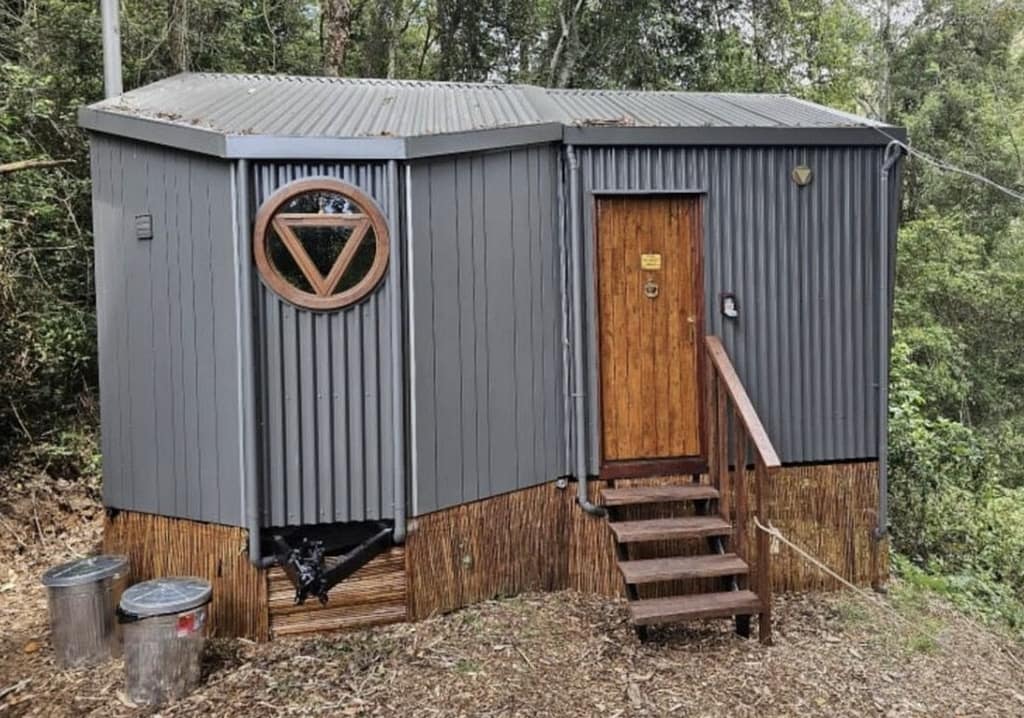
When It Works, It Works Quietly
Where tiny homes do succeed, they tend to do so without fanfare. Communities use them as temporary housing during construction. Families install them for aging parents. Crisis services deploy them for transitional accommodation.
In some cases, they become stepping stones—short-term solutions that allow people to stabilise before moving into longer-term housing. At projects like the youth-focused Tiny Homes Project in Gosford, the model has shown real promise.
“We utilise the tiny homes under a subsidised housing lease arrangement for 12 months, developing these young people’s independent living skills and their rental history,” said Coast Shelter CEO Alicia Pigot. It’s practical, targeted, and effective. But it’s also fragile—dependent on land access, partnerships, and approvals that don’t always scale.
“It requires partnerships with state and federal governments… a lot of pieces had to fall into place,” she said. That’s the quiet truth of tiny homes: they work best when systems bend around them. And systems don’t bend easily.
Advertisement:
The Infrastructure Catch
Even when a tiny home is built, approved, and delivered, another challenge emerges—plugging it into the world. Sewerage, water, electricity. The unglamorous essentials.
“If a tiny home… is included upfront in a development application, plumbers will connect it,” said Narara Ecovillage spokesperson Jo Hunt. Add it later, and things unravel.
Councils often lack inspection pathways for retrofitted connections. Alternative approvals can stall. A home can exist physically but remain bureaucratically stranded—unable to legally connect to the systems that make it liveable. It’s a reminder that housing isn’t just about structures. It’s about integration.

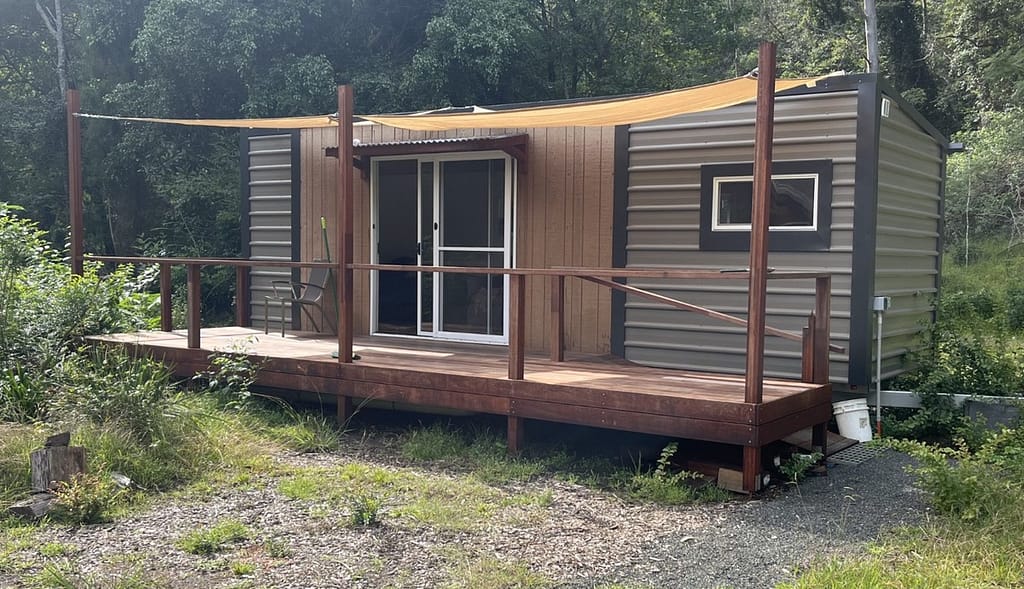
Bigger Ideas Than Smaller Houses
Some experts argue the real opportunity isn’t the tiny home itself—but what it reveals. Dr Sarah Breen Lovett describes many tiny houses as “a glorified caravan… with the idea in mind that you don’t have to get a DA, but there is no way of getting around approvals.” Her focus is elsewhere: freeing up land.
“If there were a relaxation of rules… this would release a lot of land and burden, particularly with older members of the community who have larger yards than they need,” she said.
In other words, the real bottleneck may not be the size of homes—but access to land and the rules governing it. Property analyst Tony Myers echoes that sentiment from the market side.
“They don’t have a problem with the size of the living space… What they’re really looking for is a small parcel of land and more privacy than apartment living allows,” he said. It’s not minimalism driving demand. It’s autonomy.
A Missing Link in the System
At the national level, the Australian Tiny House Association points to a structural gap. Tiny homes don’t fit neatly within existing building codes. Without a recognised category, they struggle to be treated as permanent housing—even when they function as exactly that.
“Defining transportable small-dwelling parking spaces is the missing link between affordable construction and accessible home ownership,” said CEO Danielle Lester. It’s a deceptively simple idea: if you can define where these homes go, you unlock where people can live.
Dr Shearer offers a practical path forward. “Permitting owners of Tiny Houses On Wheels… to let space on private property for at least two years… will allow many to live in areas close to education, medical facilities and transport,” she said.
It’s not a grand redesign of cities. It’s a loosening of constraints. The kind of adjustment that could ripple outward—into backyards, unused land, and transitional spaces that currently sit idle.
Tiny homes are not the solution to homelessness, nor will they fix housing affordability on their own. They are a signal that people are willing to rethink how they live. That smaller, cheaper, more flexible housing has a place in the mix. That the crisis is not just about supply—but about the kinds of homes we allow to exist.
Right now, the world has no shortage of land, materials, or ideas. What it lacks is alignment—between policy and reality, between need and permission.
Until that changes, the tiny home will remain what it already is in many places: not a fringe curiosity, but a quiet workaround in a system struggling to house its own people.
From our affiliates, Amazon
Tiny Houses, 2021 by Sandra Leitte
Tiny Houses, 2009 by Mimi Zeiger
Tiny Houses – Construct Your Perfect Tiny House: Obtain Social Freedom With The Tiny House Movement (The Social Freedom Enlightenment Project, 2016 by Jackie Cox
The Tiny House Movement: Challenging Our Consumer Culture, 2018 by Tracey Harris
Tiny houses: How to build a perfect tiny houses and live mortgage free, 2016 by Jakeline Bryant
Related stories
Can you rent out a Tiny Home, Granny Flat, Transportable building or Caravan?
Tennant Creek’s Climate-Smart, Culturally Safe Homes
Wellness Retreat Myth – 15 Minutes Walk or a Week in Bali?
The Future of Caravan Towing: Roof-Hitched Caravans
Reflections Holidays: Family Holidays in NSW on a Budget
Circular economy booming and going cashless
The Circular Economy: A Sustainable Path Forward
Advertisement:


