

A House Built the Right Way: Tennant Creek’s Climate-Smart, Culturally Safe Home Nears Completion
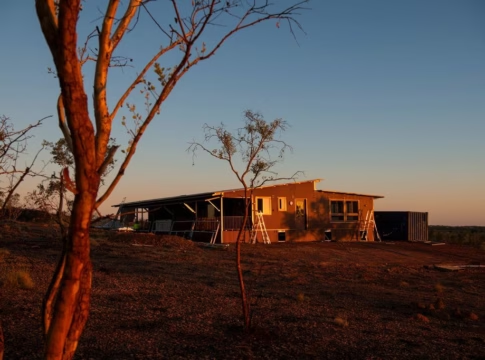
Tennant Creek has seen many houses go up over the decades, but this one feels different the moment you step inside. Maybe it’s the thick, cool hush that wraps around you even in the peak heat of the Northern Territory sun.
Perhaps it’s the sense of purpose built into its walls — quite literally — because those walls aren’t your typical imported materials. They’re made from termite-mound mud bricks, crafted locally, shaped by Country, and engineered for the brutal realities of a warming climate.
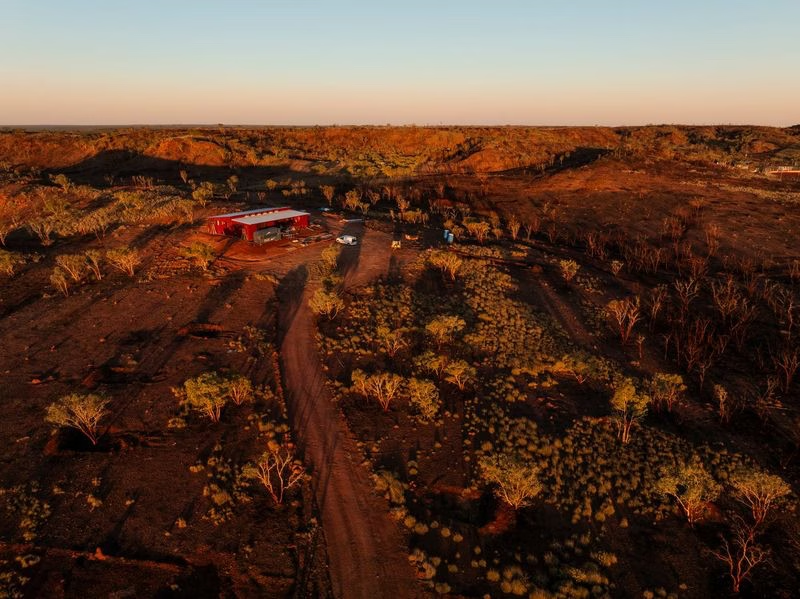
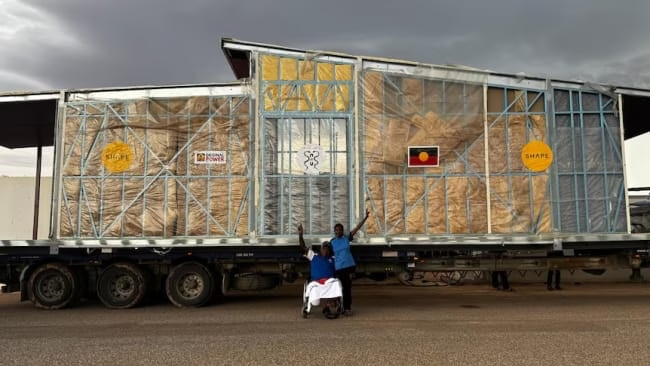
Whatever it is, this first Explain Home — the pilot model for a new generation of community-driven housing — is nearing completion. And in Tennant Creek, that milestone carries weight far beyond a single construction site.
Advertisement:
Built for Heat. Built for Country. Built for People.
In the Barkly region, heat isn’t just uncomfortable — it’s dangerous. Homes that can’t cope with 40-degree days become health hazards. The new climate-smart design tackles this problem with high-thermal-mass walls that naturally regulate internal temperatures.
Where many houses in remote Australia rely on underperforming air conditioners and patchy maintenance, this one starts with the physics of staying cool.
Then it adds renewable power on top.
Solar panels and battery storage are already in place. Rainwater harvesting too. The family who moves in won’t just live in a house — they’ll live in a system designed to sustain them, a home that works with Tennant Creek’s environment, not against it.
Housing Designed the Right Way — With Community at the Core
This home didn’t come out of a government blueprint or a distant architect’s mind. It grew from a set of principles shaped by Warumungu knowledge keepers and articulated through Wilya Janta’s Right Way Housing Guidelines — a document that spells out how housing should be planned, designed, delivered and maintained in community.
The Guidelines offer a deceptively simple message: Work with community, not to community.
It’s a shift in power. A shift long overdue.
With the Federal and NT Governments committing $4 billion to remote housing, the urgency is obvious: investment alone won’t fix housing unless the approach changes. The Right Way Guidelines provide a blueprint for that change — real engagement, real cultural safety, real durability.
As Wilya Janta’s Chief Operating Officer, Dr Simon Quilty, puts it:
“Walking through this home, you can feel the difference straight away. It stays cool in the heat, it uses the sun and the rain properly, and it’s built in a way that makes sense for Warumungu families. This is what housing should look like in remote communities.”
Quilty doesn’t mince words about government and industry either:
“Government and industry talk a lot about engagement, but the Right Way Guidelines lay out what real engagement looks like. It’s community-led. It’s respectful. And it results in homes like this one — homes that are culturally safe, climate-ready and built to last.”
“Don’t Just Talk to Us — Listen.”
For Warumungu elders and families, this moment represents something they’ve been asking for across generations. Not consultation as a box-ticking exercise, but true collaboration.
Wilya Janta’s Chief Cultural Officer, Jimmy Frank Jupurrurla, calls it plainly: “We designed these Guidelines so government and industry can work with us properly. Our community has been saying the same thing for decades: don’t just talk to us — listen.”
“This isn’t just one house. It’s proof of a better way to build across the Territory. When people follow the Right Way Guidelines, communities get the housing they deserve.”
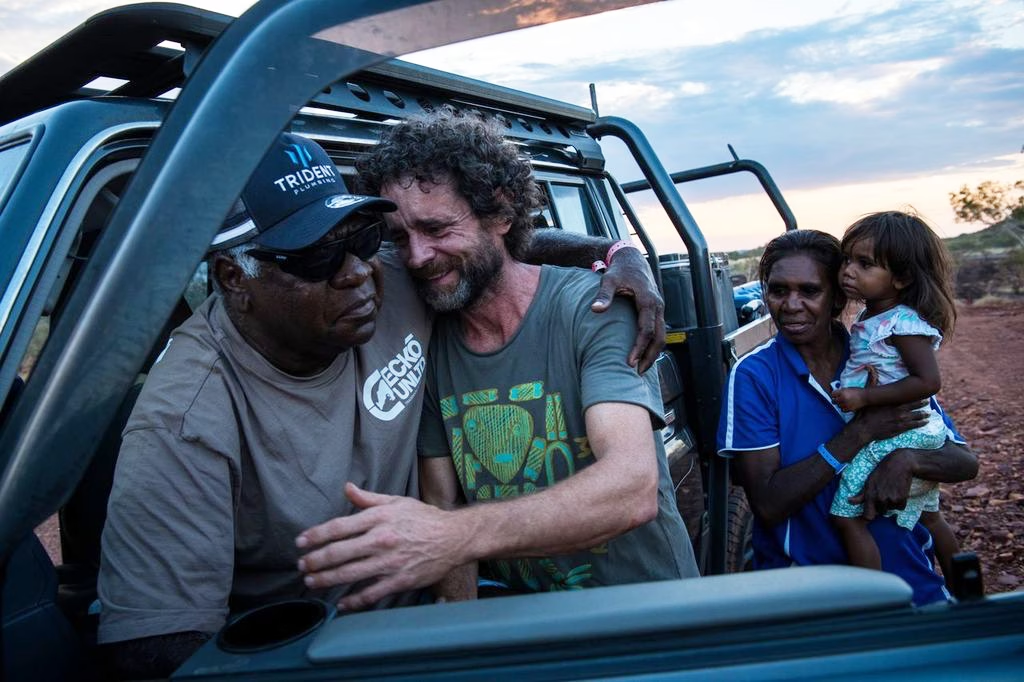
Norman Frank Jupurrurla. Warumungu Elder, Board member of Julalikari Council, Anyingini Aboriginal Health, Committee member Central Land Council.
A Model for the Barkly, the Central Desert — and Beyond
Though these Guidelines are deeply rooted in Warumungu Country — its seasons, soils, cultural protocols, social dynamics — the process itself is portable. Other communities in the Barkly and Central Desert regions can adopt the framework, shape it to their knowledge systems, and create their own versions of climate-ready, culturally grounded homes.
It’s not a one-size-fits-all solution. It’s something more powerful:
a method that honours the knowledge and priorities of each community.
Advertisement:
More Than a House — A Turning Point
As the finishing touches go on Tennant Creek’s first Explain Home, the project stands as a quiet rebuttal to decades of housing failures in remote Australia. It shows what becomes possible when design is embedded in Country, when cultural safety is non-negotiable, and when people are treated as collaborators, not recipients.
This house won’t change the world on its own — but it may well change how the world thinks about remote housing. And in the Northern Territory, that’s a revolution built brick by termite-mound brick.
What Are the Right Way Housing Guidelines?
The Right Way Housing Guidelines are a community-created blueprint for designing, building and maintaining homes in Tennant Creek — rooted in Warumungu knowledge, shaped by lived experience, and designed to ensure that government and industry finally get it right.
They are not another policy document written in an office. They are a set of expectations, protocols and practical steps co-designed with community through Wilya Janta.
Here’s what they mean in practice — in plain language.
Housing Must Be Community-Led
The Guidelines define genuine engagement:
Not fly-in, fly-out meetings.
Not boxes ticked on a consultation form.
But working side by side with Warumungu people from the first idea to the last nail.
Community members determine priorities, designs, materials and cultural considerations — ensuring homes actually suit the way people live.
Advertisement:
Cultural Safety Is Non-Negotiable
The Guidelines ensure housing respects:
- kinship systems
- gendered spaces
- avoidance relationships
- cultural obligations
- how rooms are used during ceremony, mourning and gathering
This makes homes not just habitable, but culturally appropriate — places where families can thrive.
Climate Resilience Must Be Built In
Remote housing fails when it’s copied from city templates.
The Guidelines prevent that.
They require designs adapted for Central Australian heat and seasonal extremes:
- high-thermal-mass walls
- passive cooling
- solar energy
- secure water collection
- durable local materials
Homes should work with Country, not fight it.
Local Knowledge Is a Construction Asset
Termite-mound mud bricks, shading angles, breezeways, orientation to the sun — these aren’t just design quirks. They’re the product of Warumungu knowledge of Country.
The Guidelines instruct builders to use local materials, local labour and local expertise wherever possible.
Durability Over Quick Fixes
Too many remote houses are built cheaply, repaired often, and replaced early.
The Guidelines flip the script.
They prioritise long-term durability, easy maintenance, and designs that withstand decades of heat, dust and wear.
Accountability for Government and Industry
This is where the Guidelines become powerful.
They give communities a tool to say:
“This is what proper engagement looks like — and we expect you to do it.”
With billions of dollars in new housing investment on the table, the Guidelines ensure communities can measure whether government and contractors are doing the Right Way — or cutting corners.
Advertisement:
A Model for Other Communities
While created for Tennant Creek, the process is designed to travel.
Communities across the Barkly and Central Desert can develop their own versions, tailored to their Country, culture and priorities.
Because the Right Way is not a template — it’s a philosophy: Build with community, not to community.
Related stories
Can you rent out a Tiny Home, Granny Flat, Transportable building or Caravan?
A solar passive home on a productive suburban block
The ImPossible House: Living Off the Grid in the City
Artist and Activist, Uncle Bruce Shillingsworth
Warlimpirrnga Tjapaltjarri, artist, the Pintupi Nine
Murujuga Art listed as Australian Cultural World Heritage site
Report Shows Sharp Rise in First Nations Deaths
Smarter Ageing: How Tech and Training Will Redesign Care
Advertisement: