

Harley Parker’s Photography – ‘Just One in the Crowd’
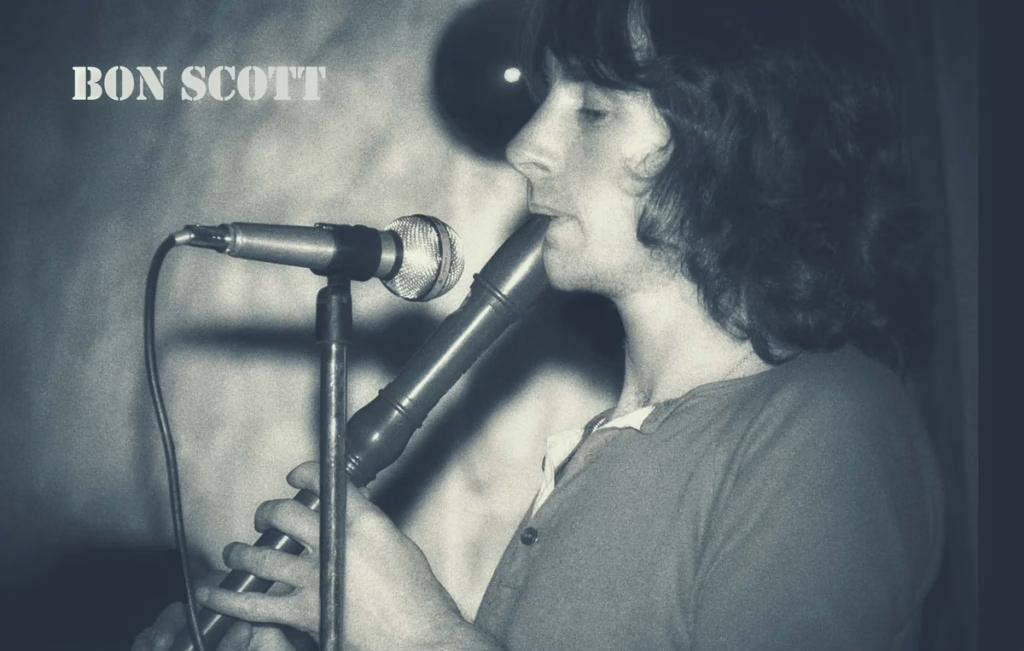
In 1971, Melbourne’s live music scene was gathering momentum — loud, unpredictable, and full of possibility. Bands were finding their sound, audiences were finding their voice, and in the middle of it all was a young photographer with a camera and a front-row view of it unfolding.
More than fifty years later, that body of work comes together in Just One in the Crowd, a book and exhibition by Harley Parker, launching at Shedshaker Brewing Company as part of the Castlemaine State Festival.
This is not a retrospective assembled from assignments or commissions. It’s something far more personal — a record of a moment in time, captured from within.

Advertisement:
A Beginning That Became a Record
On his eighteenth birthday, Parker was given a camera by his grandfather. That same night, he walked into the Thumpin’ Tum for the first time.
It was the start of something that would shape both his life and, in hindsight, the visual memory of an era.
“At the time, these photographs were not taken with the idea of creating an archive. I was simply responding to the energy of the rooms — the performers on stage, the anticipation in the crowd, and the feeling that something new was happening in Melbourne’s music culture.”
That instinct — to follow the energy — is what gives the work its strength. The photographs feel immediate because they are immediate. They place you exactly where he stood.

Advertisement:
Before It Was History
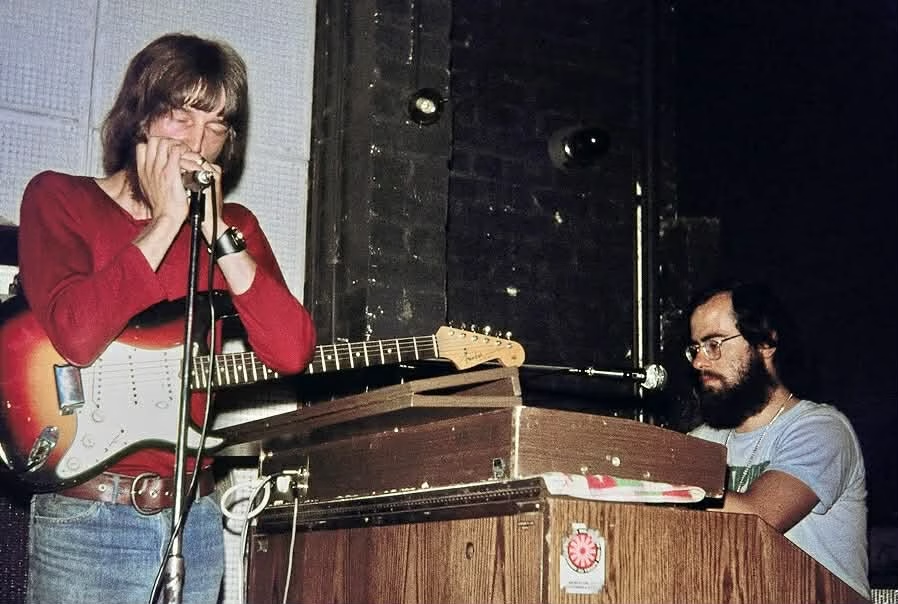
The images in Just One in the Crowd were taken more than fifty years ago, many now being shown publicly for the first time.
“These photographs were taken more than 50 years ago and many are being publicly exhibited for the first time. I found myself in the middle of Melbourne’s live music scene with a camera in my hands.”
No fancy photography passes, no backstage access, just the view from the crowd with a camera in hand.
“Looking back more than fifty years later, these images have become something else. They now form a visual record of a scene that helped shape Melbourne’s rock music identity.”
What Parker captured wasn’t a headline or a moment of fame — it was the culture forming in real time. The spaces between the big moments. The atmosphere that defined the experience.
Advertisement:
Led Zeppelin More

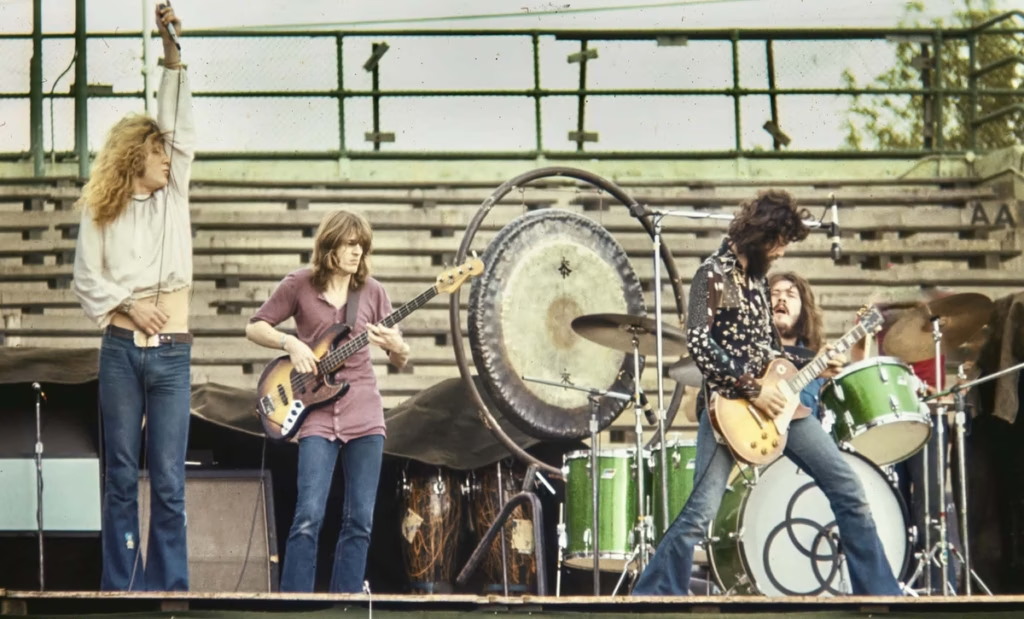
The iconic Led Zeppelin IV album was released on 8 November 1971. Led Zeppelin played to 14,000 people in drizzling rain at Kooyong Tennis Stadium in Melbourne on 20th February 1972. Harley Parker was there and has the photos to prove it.

Advertisement:
Daddy Cool before they were cool …
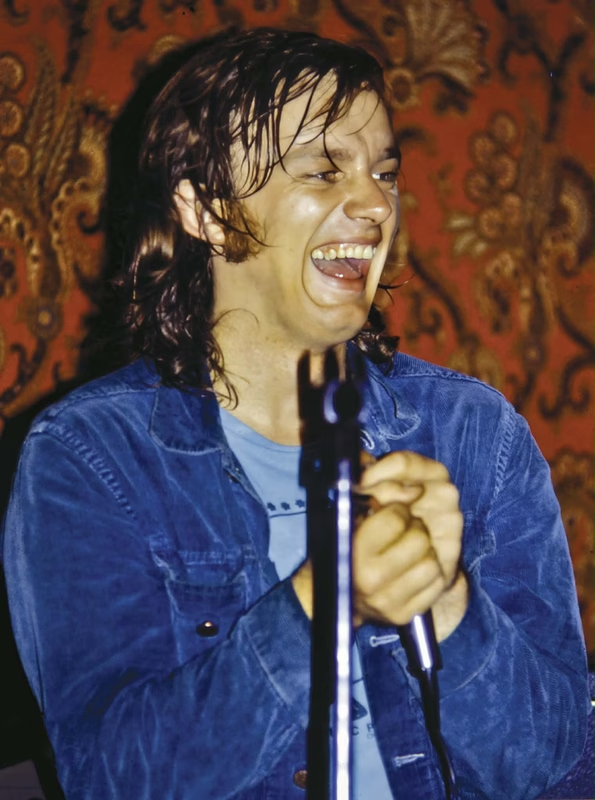
One of Parker’s most vivid memories comes from an early night at the Thumpin’ Tum. On stage was Daddy Cool — a band still finding its audience.
It was still early in 1971 and on one quiet night at the Thumpin’ Tum, there was just me and one or two others. We were standing in the dark watching a band that was only getting a moderate following late in 1970.
As they played I wondered why they were getting noticed at all as I naively thought that everyone was like me and didn’t like rehashed 50’s music.
This moderate following was to turn ramped and change dramatically over the course of the next few months as their popularity would go through the roof.
It was on a Friday night that I took a photo, which unfortunately hasn’t survived too well, but it is still the only picture I have seen of “Daddy Cool” with absolutely no one watching them.
But the next time they played at the Tum, I was unable to get near them for my second picture of Daddy Cool as I was pulverised by heaving, sweating bodies, dancing at a frantic pace.
I started taking photos of them probably to record this hysteria, which took me along for the ride, as it wasn’t their music – it was the crowd’s response to them that excited me.
There is a photograph from that night — worn with time — showing Daddy Cool playing to almost no one. It stands as a rare glimpse of a band just before the surge.
That perspective runs through the entire collection. These photographs capture not just the performers, but the shared experience — the movement, the density, the energy of people reacting in real time.
Daddy Cool formed in Melbourne, Victoria, in 1970 and were originally playing doo-wop and 1950s-style rock. Their debut single “Eagle Rock” was released in May 1971 and stayed at number 1 on the Australian singles chart for ten weeks.
Advertisement:
The Rolling Stones Australian Tour 1973
When The Rolling Stones set their sights on Australia and New Zealand in 1973, it had been seven long years since their last visit in 1966—and not everyone was thrilled about the reunion.
In early January 1973, Australia’s Immigration Ministry hinted that one unnamed member might be barred, while Japan went further, refusing entry to Mick Jagger over prior drug convictions. For a moment, the tour looked like it might unravel before it began. Then, in a bureaucratic plot twist, Australia relented on 9 January and the band was cleared to enter.

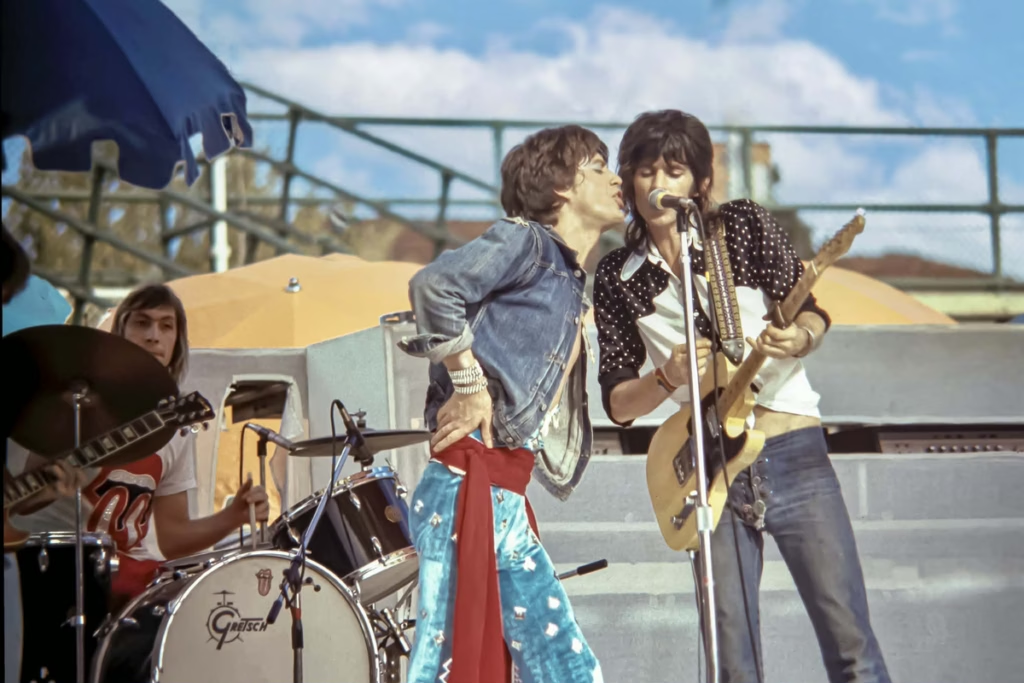
The Rolling Stones Australian Tour kicked off on 14 February, 1973 rolling through Brisbane, Melbourne, Adelaide, Perth and Sydney, wrapping up at Sydney’s Royal Randwick Racecourse on 27 February. The Brisbane opener was twice delayed by weather—proof that even rock gods can’t outplay the Queensland sky—while Adelaide delivered the expected chaos, with around 5,000 fans clashing with police and 21 arrests.
Days later, Immigration Minister Al Grassby publicly backed the decision, declaring the band “an excellent example to Australian youth” and dismissing the moral panic with a line that still lands: giving a man a bad name and hanging him for it, he said, was “immoral and un-Australian.”
In Melbourne, local heroes Madder Lake warmed up the crowds at Kooyong Tennis Stadium, playing two shows on 17 February and another on the 18th—setting the stage before the Stones swaggered on to claim it.
While the tour wasn’t promoting a specific album, their acclaimed Exile on Main St. had been released on 12 May 1972.
Advertisement:
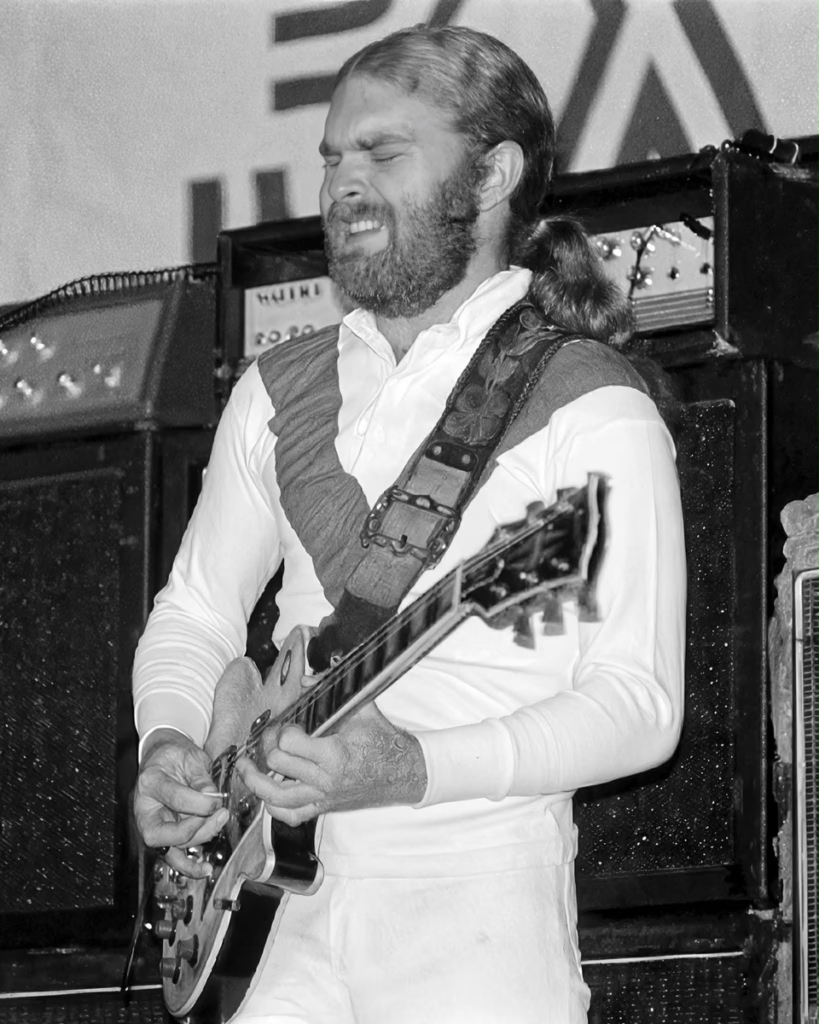
Billy Thorpe

The Thumpin’ Tum
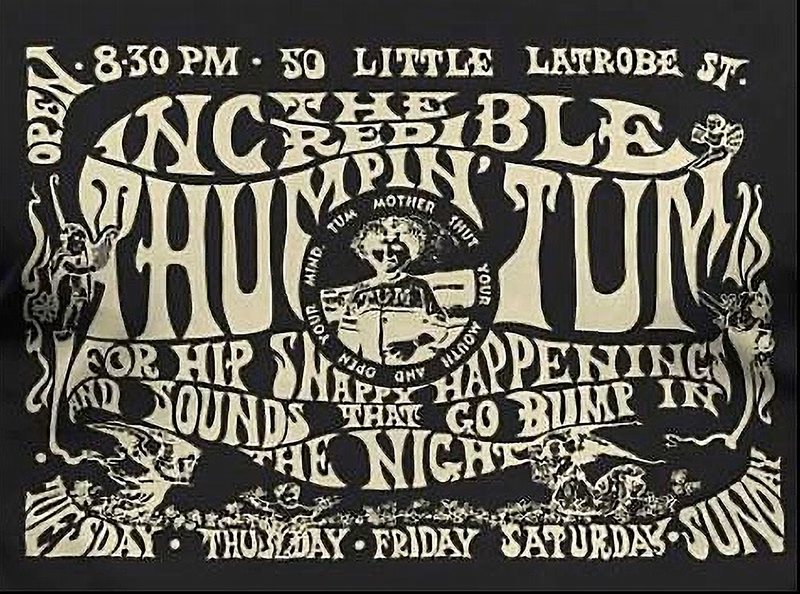
The Thumpin’ Tum, at 50 Little Latrobe Street in Melbourne’s CBD, was one of the city’s earliest alternative rock venues, opening in 1966. Founded by Ken Moat and Ron Eden, with David Flint soon taking over ownership, the club emerged at a time when traditional town hall venues no longer suited a new generation of music fans.
Flint, who ran the venue with his wife Jan — a familiar face on the door — helped shape the Tum into something distinctive. Its Victorian décor, complete with furniture and the now-famous upside-down umbrellas suspended above the dance floor, gave it an atmosphere unlike anything else in Melbourne at the time.
More than just a venue, the Thumpin’ Tum quickly became a proving ground. If a band played there, it meant something — it was widely seen as the place to be heard, and the place where reputations were made.
The experience extended beyond the music. The venue was known as much for its toasted ham and tomato sandwiches as for its thick, smoky air — an unofficial and ever-present part of the scene.
By 1970, worn down by the demands of running the club, Flint sold the business. It continued briefly under the same name before rebranding and closing within a year, but its influence on Melbourne’s live music culture had already been secured.

Advertisement:
A Scene Revisited
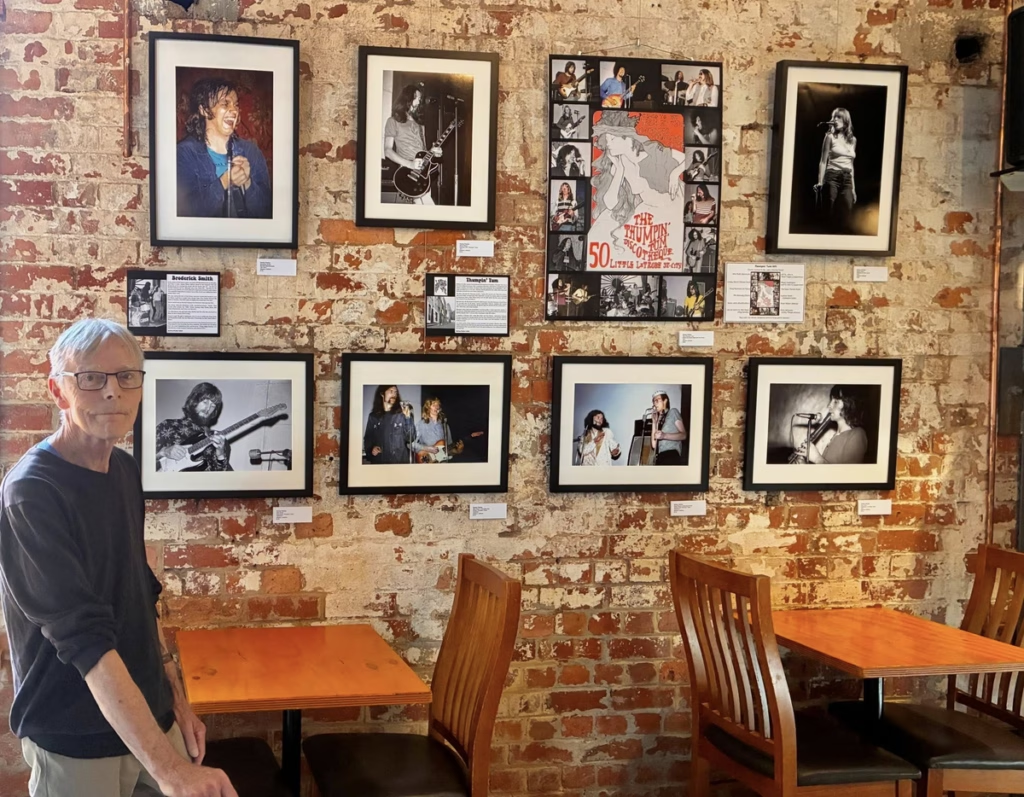
The launch of Harley Parker’s Just One in the Crowd at Shedshaker Brewing, 9 Walker St, in Castlemaine’s Mill precinct, brings that era back into the present.
Joining the evening will be Mike Rudd of Spectrum and Ariel, along with Bobby Valentine, performing a few tunes — a direct link between the images on the wall and the people who helped create them.
Signed copies of the book will be available, and a selection of Parker’s photographs will be exhibited throughout the festival.
A Lasting Contribution
Just One in the Crowd is more than a collection of photographs. It is a rare and valuable record of Australian music at a formative moment — seen from within the audience, where the connection between performer and crowd is at its strongest.
Parker’s work reminds us that the story of music is not only told on stage. It lives in the rooms, in the people, and in the energy that passes between them.
For those who were there, it will feel familiar. For those who weren’t, it offers a way in.
Advertisement:
Just One in the Crowd — Photo Exhibition & Book Launch
By Harley Parker
📍 Shedshaker Brewing Company, 9 Walker St, Castlemaine, Victoria
📅 Wednesday 25 March, 2026 5:30pm
🎟 Free entry
The Shedshaker Taproom is open for meals Tuesday through Sunday, serving lunch and dinner with a relaxed, welcoming vibe. Take time to explore The Mill: a vibrant hub of local makers, artists, boutiques and galleries, all just a few steps from your table.
Buy Harley Parker’s book, Just One In The Crowd, online here.
Exhibition: March 15 – April 12, 2026. Open daily from 12pm (closed Mondays)

Advertisement:
Related stories
Search Amazon for music by The Radiators
Vicky O’Keefe presents ‘The Wild One’ Johnny O’Keefe Story
Ringside: from the man behind superstars Cold Chisel
Russell Morris fronts orchestra & 10-piece band
Machinations: A Musical Odyssey from Down Under
Where is Australian legendary guitarist Randall Waller now? Album review “More”
Radiating the Sounds of Australia: The Radiators’ Journey
Advertisement: