Running on Empty: What WWII Can Teach Us About Fuel Storage in a Crisis
Australia is currently rediscovering a hard truth: a nation without fuel is a nation at a standstill. As the Middle East conflict pushes petrol past $2.30 a litre and queues form at Victorian stations, the conversation has turned to our “fragile” national stockpile.
But we’ve been here before. During World War II, Australia didn’t rely on overseas leases or hope; we built a hidden, inland backbone of fuel depots designed to survive the unthinkable.
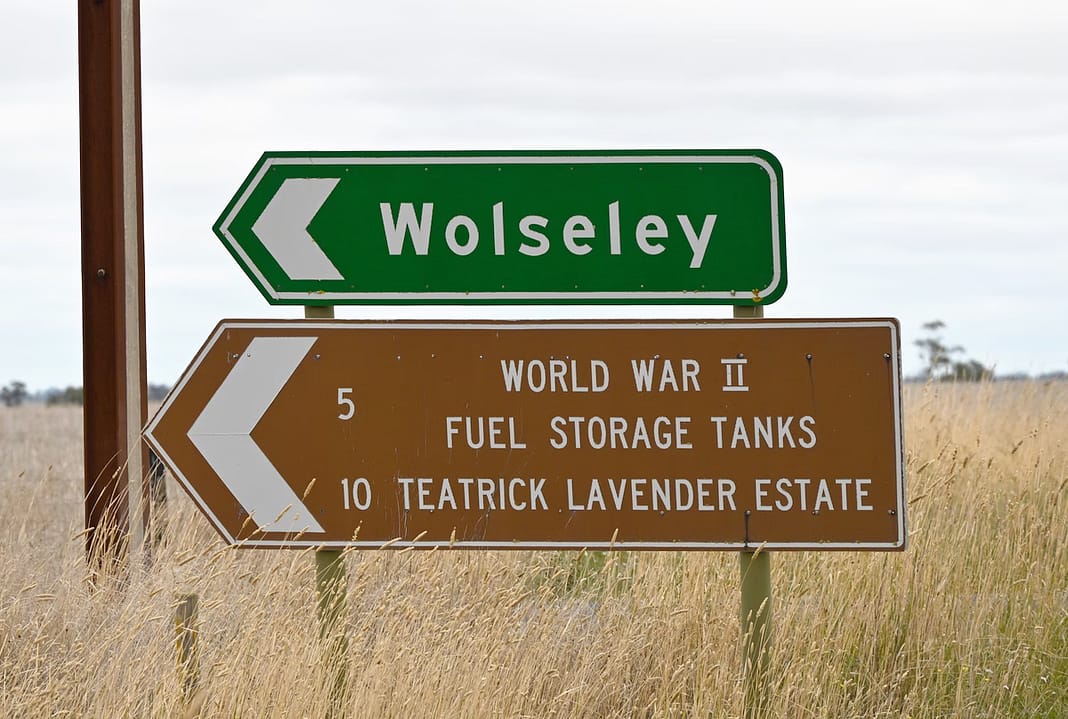
I took a detour to Wolseley on the South Australia/Victorian border to see what a real strategic reserve looks like.
Advertisement:
Petrol Rationing During World War Two
Petrol rationing was introduced in 1940 as tanker deliveries were diverted to higher-priority fronts like Britain. The government eventually cut civilian petrol use by up to half, requiring motorists to apply for licenses and use ration coupons.
Rationing aimed to conserve fuel for the military—particularly the air force—while keeping essential services running. It forced a radical lifestyle shift: less driving, more bicycles, and a reliance on “gas producers” (bulky charcoal burners strapped to cars). These measures helped stretch Australia’s limited reserves, which at the start of the war were only enough for a few months.
A Country Moves Its Fuel Inland – Inland Aircraft Fuel Depots—IAFDs
By 1942, Australia had a problem. Japanese submarines were active along the coast, and the idea of fuel sitting in big, juicy coastal tanks was about as comforting as leaving your wallet on a park bench.
So the Royal Australian Air Force and planners got pragmatic. They built Inland Aircraft Fuel Depots—IAFDs—along railway lines, away from obvious targets. Trains would bring fuel inland, store it in bulk, and from there trucks would feed nearby airfields. If the coast got hit, the war effort could still run.
Six of these were built in Queensland alone—Toowoomba, Gayndah, Charters Towers, Yarraman, Roma, and Cloncurry—each positioned with the kind of quiet logic that doesn’t make headlines but wins wars.
And then there was Wolseley, tucked away on a quiet country road in South Australia near the Victorian border.
Advertisement:
Wolseley Inland Aircraft Fuel Depot
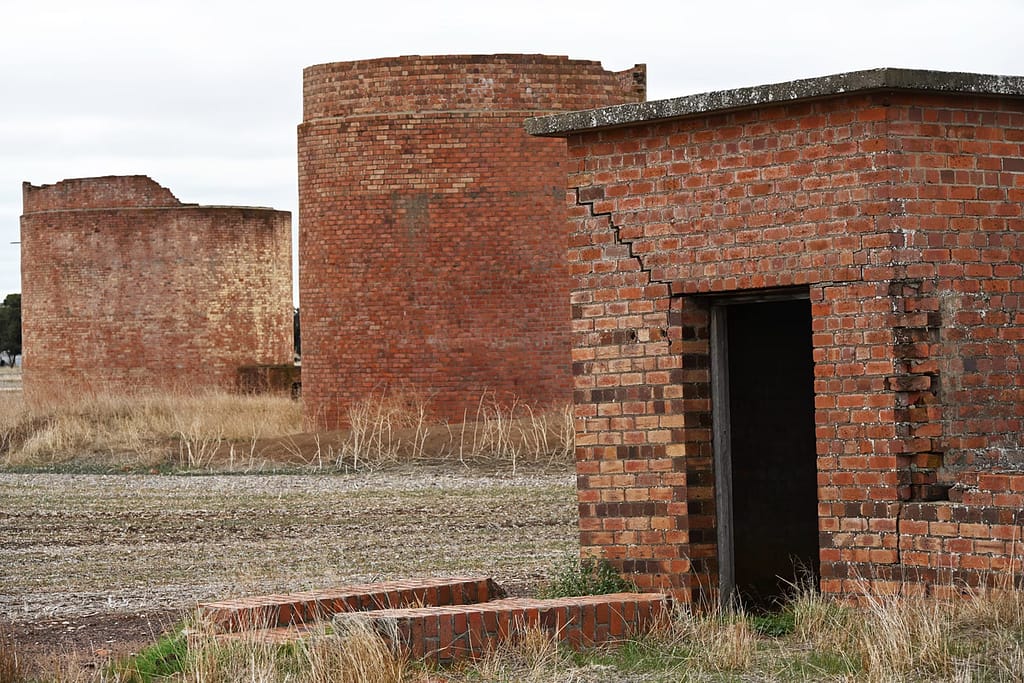
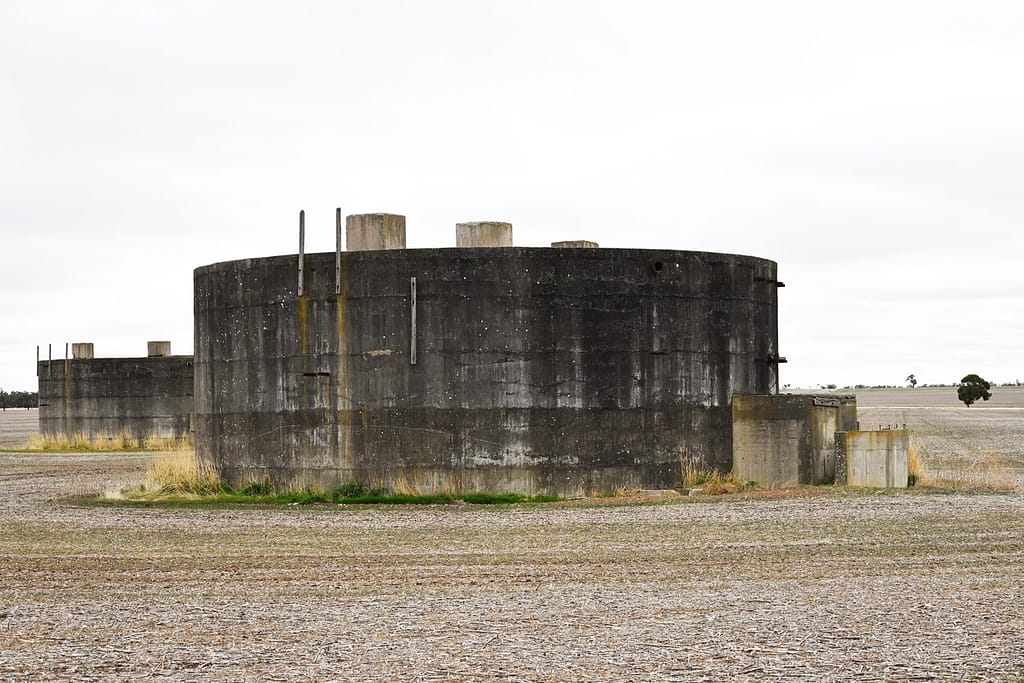
Tucked into South Australia, the Former Wolseley Inland Aircraft Fuel Depot was built in two stages between 1941–43. Today, it’s heritage-listed, described as the oldest, largest, and most complex of its type in the state.
If you want to wander through its official record (and you should), here it is:
👉 https://maps.sa.gov.au/heritagesearch/HeritageItem.aspx?p_heritageno=21067
On paper, it sounds dry: pump house, drum filling platform, six fuel tanks. In reality, it was a wartime lifeline. These places were built with one brief: don’t blow up, and don’t be seen doing it. The depots typically included:
- Large steel storage tanks set on concrete foundations
- A pump house to move fuel between rail, tank, and truck
- Drum filling platforms for smaller distribution
- Rail sidings for direct fuel delivery
- Storage for T.E.L. (tetra ethyl lead), used to boost aviation fuel octane
Everything was functional, robust, and designed to be repaired quickly if damaged. Think less “infrastructure” and more “industrial bunker with plumbing.”
Advertisement:
Were These Fuel Storage Tanks Secret?
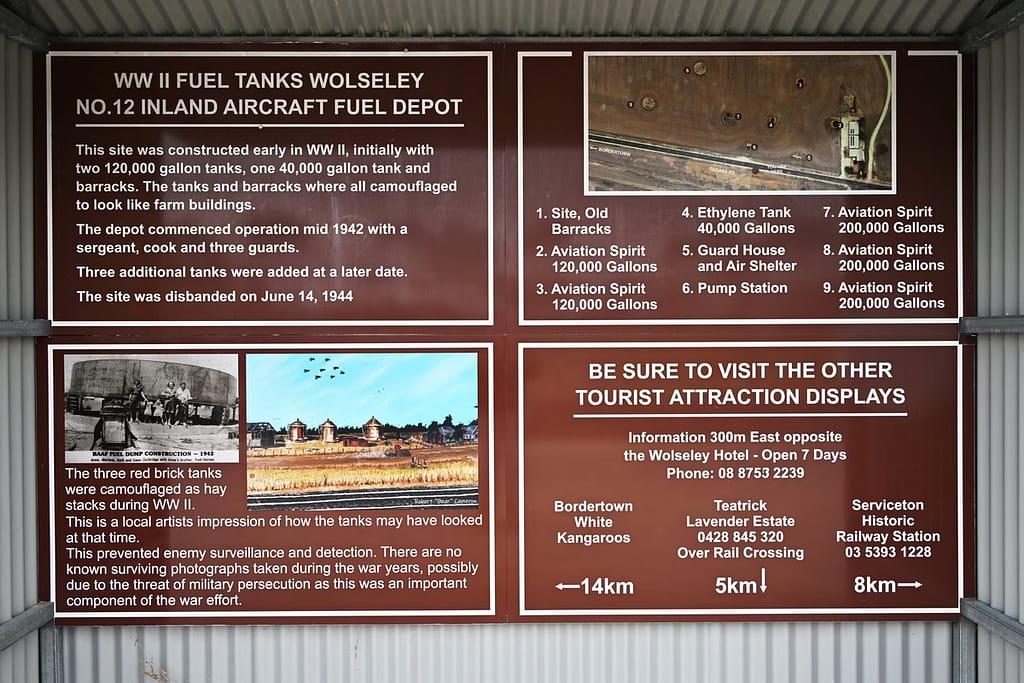
These depots weren’t advertised, photographed, or discussed over tea. There are no known photos of them during WWII. The official secrets act discouraged that sort of thing.
The Loose Lips and Careless Talk campaigns were effective at preventing gossip and even farmers in remote locations felt like doing their bit for the war effort by not talking about them.
Even so, these tanks were camoflaged and disguised to look like hay stacks and farm buildings.
Their inland locations, often in rural or lightly populated areas, were part of the camouflage. You didn’t need James Bond-level secrecy—just distance, discretion, and a lack of signposts saying “valuable explosive liquids stored here.”
How Much Fuel Did They Hold?
Typical IAFDs could store millions of liters of aviation fuel. Each large tank held hundreds of thousands of liters. Combined with stacks of drums ready to be blended with T.E.L., these weren’t petrol stations—they were strategic insurance policies.
The U.S. forces, recognizing Australia’s vulnerability, funded the construction of approximately 32 depots at a cost of roughly £1 million, even stationing American guards on-site. This was part of the “Petersburg Plan,” which drew a defensive line from Brisbane through Broken Hill to Adelaide. If the coast fell, the RAAF would still have enough reserves to stay in the fight for months.
The Uncomfortable Parallel
Fast forward to 2026. We have traded dispersed inland redundancy for “just-in-time” delivery and global dependency. It is efficient and elegant—but it is also fragile.
Today, Australia imports roughly 90% of its liquid fuel. We no longer have a “fortress” of stored energy; we have a system designed for flow, with a thin buffer at the edges. While we lease storage in the United States Strategic Petroleum Reserve, that fuel is half a world away. In a crisis that disrupts global shipping, those barrels are technically ours, but practically unreachable.
What WWII Got Right
The IAFDs weren’t glamorous. No one “Instagrammed” a pump house. But they embodied a mindset that feels radical today: plan for disruption, not convenience.
Spread your risk. Store what matters. Build quietly. Assume the worst. And maybe—just maybe—don’t keep all your fuel sitting on the coastline, waiting for someone else’s war to arrive.
Advertisement:
The Survivors: WWII Fuel Depots You Can Still Visit
Tanks Arts Centre, Cairns
While depots like Wolseley stand as silent monuments, others have found a second act. In Cairns, the Tanks Arts Centre has turned three massive 1944 Navy oil storage units into an innovative cultural precinct, proving that even the most functional wartime bunkers can be reimagined for a modern era.
While many inland depots were left to the elements, the Royal Australian Navy’s oil storage tanks in Cairns found a second life. Decommissioned in 1987, these three massive concrete structures have been transformed into a world-class contemporary arts precinct.
Today, “Tank 5” serves as an iconic performance space where the rugged, oil-stained timber poles and towering concrete walls provide a haunting, Gothic backdrop for live music and culture. It is a rare example of wartime necessity being repurposed for peacetime creativity.
👉 Explore the Tanks: https://www.tanksartscentre.com/
Wolseley (No. 12 IAFD, South Australia)
- Condition: The best-preserved in Australia. Includes six tanks, a pump house, and a drum platform.
- Location: Near the VIC border. From Melbourne, take the Western Hwy toward Nhill, then turn toward Wolseley. The site sits near the old railway line.
- Link: Heritage Listing
Yarraman (No. 21 IAFD, Queensland)
- Condition: Fascinating semi-underground tanks built into a hillside with concrete tunnels. One tank has actually been absorbed into a private house.
- Location: Millar Street, west of the former Yarraman Railway Station (2.5 hours NW of Brisbane).
Northam (No. 10 IAFD, Western Australia)
- Condition: Partially buried tanks. Historically significant, though less visually dramatic than Wolseley.
- Location: Northam, WA (90 minutes east of Perth). Look for local heritage markers.
Ross / Mona Vale (No. 30 IAFD, Tasmania)
- Condition: Four buried tanks and pump-house ruins. It feels more like an archaeological site—ghost infrastructure.
- Location: Tooms Lake Road, near Ross. About 1 hour north of Hobart. View respectfully from the roadside.
The Ones That Vanished
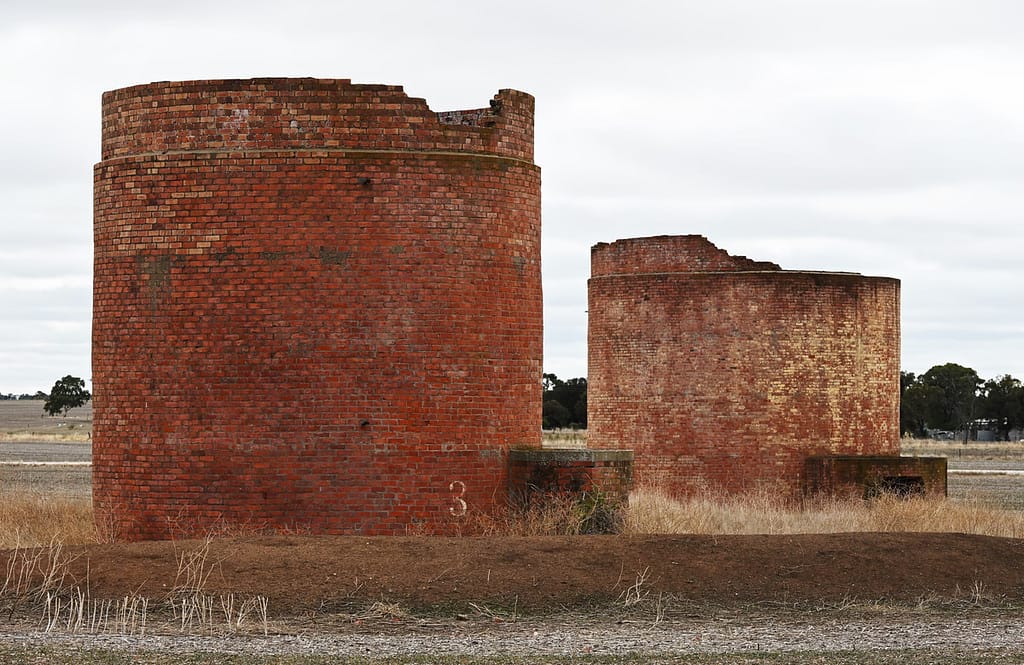
The majority—places like Cootamundra, Parkes, Tamworth, and Cloncurry—exist now only as concrete fragments or disturbed ground. They were decommissioned quickly by 1944 once the immediate threat eased.
At their peak, these 31 depots held 93 million liters of fuel. Today, they serve as a silent reminder: history has a habit of repeating itself. It just changes the headlines.
Related stories
Historic WWII wreck that sank with 1080 people found
Collecting Propaganda Postcards of WWI & WWII ° Deltiology
When Pigeon Photographers Flew in War
Loose Lips and Careless Talk: Wartime Propaganda Posters
US Political Campaign Buttons and Other Collectibles
Scuba Diving on the Woodburn wreck, Suva, Fiji
Police Ephemera ° The value of Victorian reward posters
A War on Witnesses: Remembering Gaza’s Fallen Journalists
In Memory of Fatma Hassona: A Voice Silenced, A Vision Eternal
Earth has become less peaceful, by the numbers
Advertisement: